


Share
1. Create a family emergency plan
Understand the building where you live. Was it built using anti-seismic techniques?
Request documents and information from the builder or manager to understand what risks you are taking by living there.
Where is the gas, water, and electrical lines?
Make sure they are revised regularly and that the entire family knows how to turn them off.
Where is the fire extinguisher in your home?
Learn how to use it and make sure it is revised annually.
Outside your home:
Decide on an alternative point of contact and meeting place if you are not together during the quake.
2. Identify what objects may fall and cause additional damage in your home
All furniture, cabinets, and shelves should be secured to the walls, floor, or ceiling.
All hallways should be cleared from toys and bulky furniture.
Place heavy or large objects on the floor or on lower shelves.
Do not place mirrors or heavy frames next to or above sheltering locations such as beds or tables.
Do not place beds near windows.
3. Identify the safest and most dangerous places in your home
Safe:
Interior door frames, corners of master walls, under tables and beds.
Dangerous:
Next to windows, mirrors, lamps, unsecure furniture and other objects. Don’t rush out the door and don't use the elevators.
4. Prepare an emergency kit with disaster supplies
It must include:
Water
Non-perishable food
Battery radio
Flashlight
Spare batteries
First aid kit
Essential medicine
Whistle
Copy of identification documents
Check items regularly, and replace them if they are out of date. Don’t forget, everyone must know where to find the kit.
5. Observe safety precautions when an earthquake occurs:
DROP > COVER > HOLD ON
Indoors
1. First protect yourself. Get to the closest safe space, and remember to “Drop, Cover, and Hold on”. Wait until the tremor subsides.
2. Turn off water, gas, and electricity lines.
3. Find the emergency kit and fire extinguisher, if needed.
4. If it is safe to go outside, secure an exit and meet up with your family.
Outdoors
1. Stay clear of glass or walls.
2. Watch out for collapsing buildings.
3. Move to a safe place such as a park.
4. If you are unable to flee to an open area, take refuge in a relatively new, reinforced concrete building that is seismic resistant.
5. Remain calm, especially in areas where a lot of people are gathered.
At school
1. Move away from windows.
2. Take cover under a desk, hold on to the desk’s legs.
3. Wait until the shaking subsides.
4. When the shaking stops, follow the instructions of the teachers and staff.
5. Remain calm.
At the office
1. Move to a safe place to protect yourself from falling objects or furniture and other heavy items toppling over or sliding into you.
In general
If you are trapped inside a room or unable to move, don’t keep on shouting as this could exhaust you and endanger your life. Instead, make large noises by, for instance, using something solid to hit the door or walls to let others realize that you are in the room.
What not to do when an earthquake hits
1. Do not reset your circuit breaker to restore the flow of electricity as it could start a fire.
2. Do not use elevators as there is the danger of getting trapped inside.
3. Do not use the phone except in case of an emergency.
4. Do not engage in rescue activities alone. To reduce the risk of injury, work with several people when attempting to rescue others.
5. Do not use a car to evacuate as it may impede the passage of emergency vehicles.
Follow the evacuation procedures
What to do before evacuating:
1. Gather correct information
2. Confirm the safety of your family
3. Confirm the situation inside and outside the home, stay if safe
4. If you’re away from home, stay where you are if it is safe
5. Confirm the safety of neighbors
6. Turn off possible sources of fire
7. Turn off the circuit breakers
8. Leave a memo
9. Don’t hesitate to request cooperation if needed and to cooperate
After arriving at the evacuation center:
10. Giving your contact information
11. Confirming the safety of family members, etc.
12. Share duties and tasks that need to be done

You can take five simple steps to get ready for the next earthquake. It's coming for sure, but we don't know when.
ARE YOU READY FOR THE NEXT BIG ONE?
PLEDGE #1: Create a family emergency plan:
- Understand the building where you live. Was it built using anti-seismic techniques
- Request documents and information from the builder or manager to understand what risks you are taking by living there. - Where are the gas, water, and electrical lines?
- Make sure they are revised regularly and that the entire family knows how to turn them off. - Where is the fire extinguisher in your home?
- Learn how to use it, and make sure it is revised annually. - Decide on an alternative point of contact and meeting place if you are not together during the quake.

PLEDGE #2: Identify what objects may fall and cause additional damage in your home:
- All furniture, cabinets, and shelves should be secured to the walls, floor, or ceiling.
- All hallways should be cleared of toys and bulky furniture.
- Place heavy or large objects on the floor or lower shelves.
- Do not place mirrors or heavy frames next to or above sheltering locations such as beds or tables.
- Do not place beds near windows.

PLEDGE #3: Identify the safest and most dangerous places in your home:
- SAFE: interior door frames, corners of master walls, under tables and beds.
- DANGEROUS: next to windows, mirrors, lamps, unsecured furniture, and other objects. Don’t rush out the door and don't use the elevators.
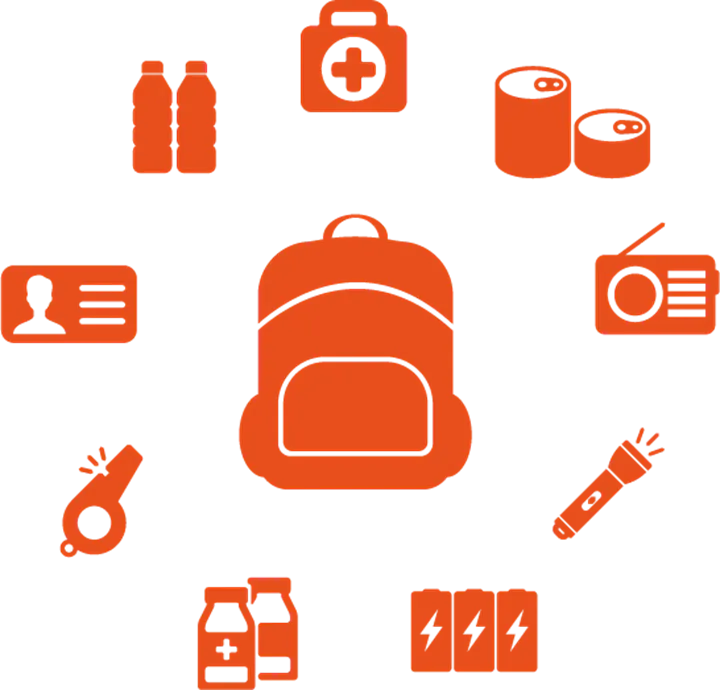
PLEDGE #4: Prepare an emergency kit with disaster supplies.
- It must include:
- Water
- Non-perishable food
- Battery radio
- Flashlight
- Spare batteries
- First aid kit
- Essential medicine
- Whistle
- Copy of identification documents - Check items regularly, and replace them if they are out of date.
- Don’t forget, everyone must know where to find the kit.

PLEDGE #5: Follow the procedures and observe safety precautions:
- Get to the closest safe space, and remember to “Drop, Cover, and Hold on”.
- Turn off water, gas, and electricity lines.
- Find the emergency kit and fire extinguisher, if needed.
- If it is safe to go outside, meet up with your family.
- Do not use the phone except in case of an emergency.
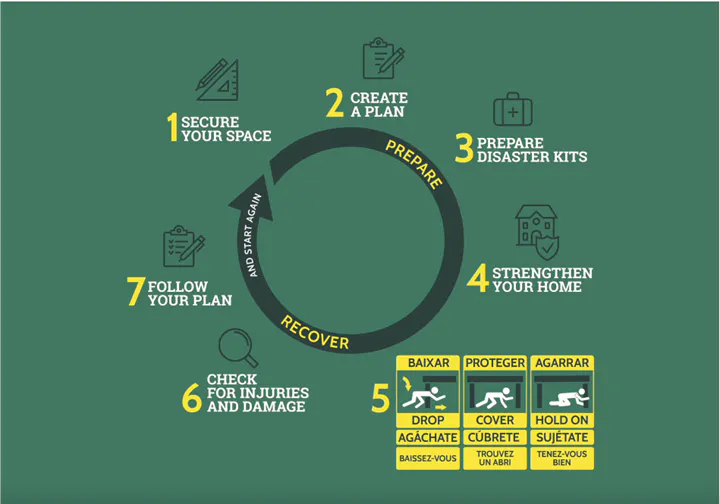
The cycle of PREPARE, RECOVER and START AGAIN.
Continue Exploring
Serviço Municipal de Proteção Civil de Lisboa:
Autoridade Nacional de Emergência e Proteção Civil:
Treme-Treme - Interactive game:
Public awareness exercise on seismic risk:
What to do before, during, and after an earthquake:
For all types of emergencies:
Composition of an emergency kit, in various languages:
Putting down roots in earthquake country, 2011 (California, USA):
Learning Links for kids (San Francisco, USA):
The Shakey Quakey School House ( LA, California, USA):
Great Shake-Out, Earthquake Drills (California, USA):
Regarding the G-Cans, the Underground Discharge Channel for the Metropolitan Area (Tokyo, Japan):
Learning Links for kids (JAPAN):
“BOSAI - ZUKIN” - utilizado como almofada para cobrir as costas de uma cadeira, quando ocorre um terramoto, cobre a cabeça com ela para atenuar o impacto da queda de objetos ou detritos:
(used as a cushion to cover for the back of a chair, when earthquake occurs, you put cover your head with it to mitigate the impact):
ONEMI (Santiago do Chile, CHILE):
Que faire en cas de Seisme?:
New Zealand ShakeOut (national earthquake drill and tsunami hīkoi):
Bibliography
Show other RFID points
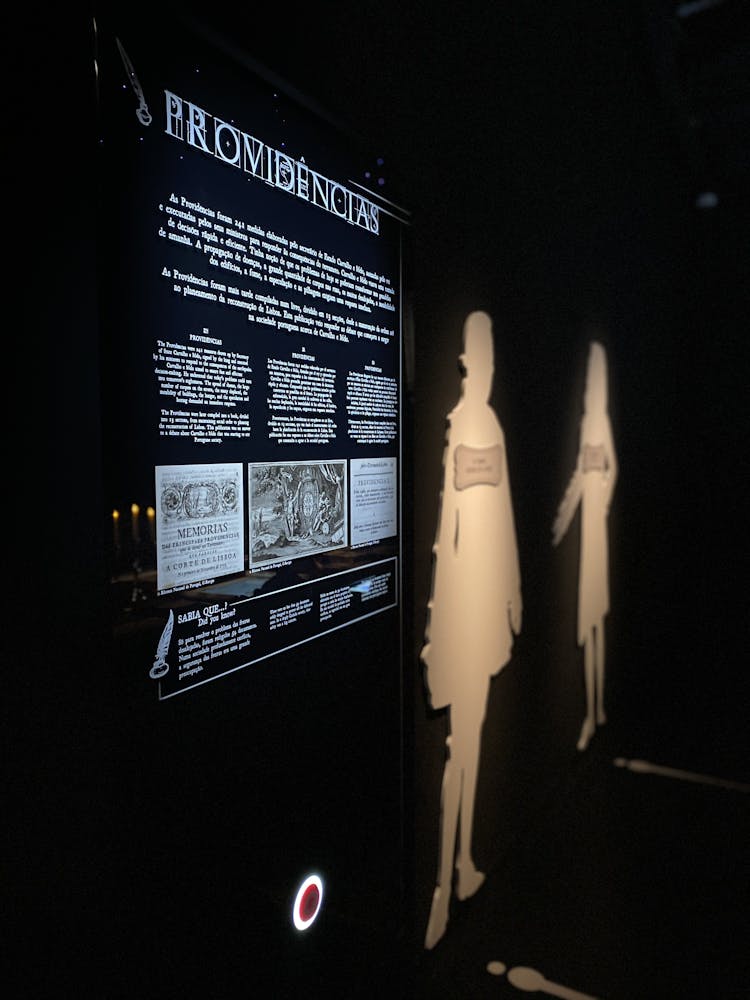
Room of Tales
Providências
Read more
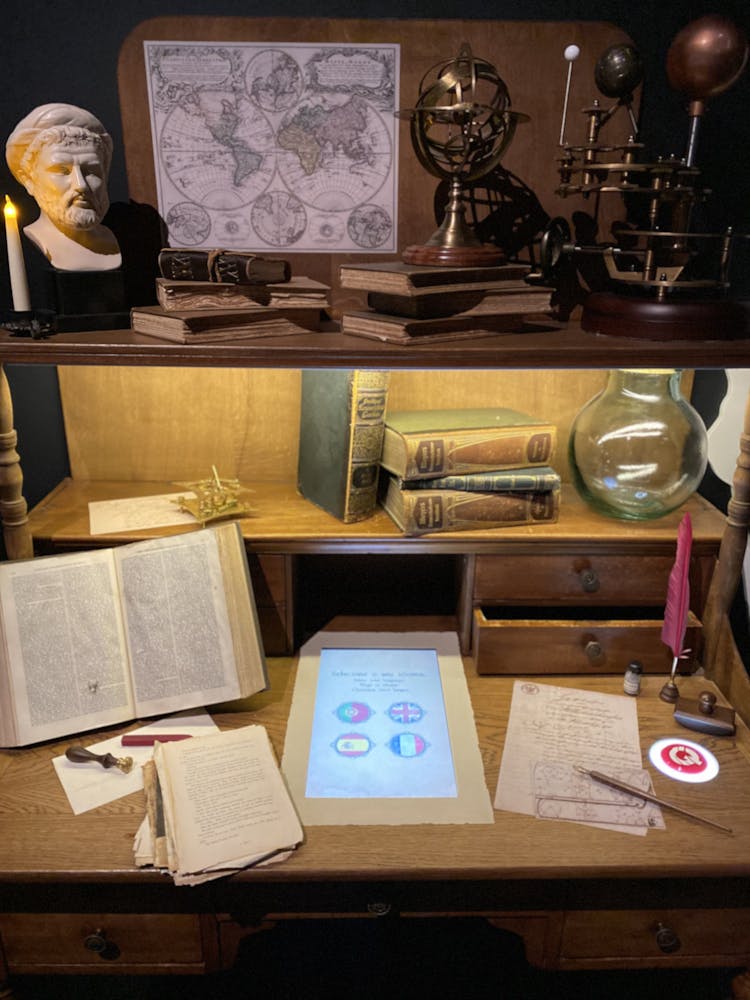
Room of Tales
The German merchant
Read more
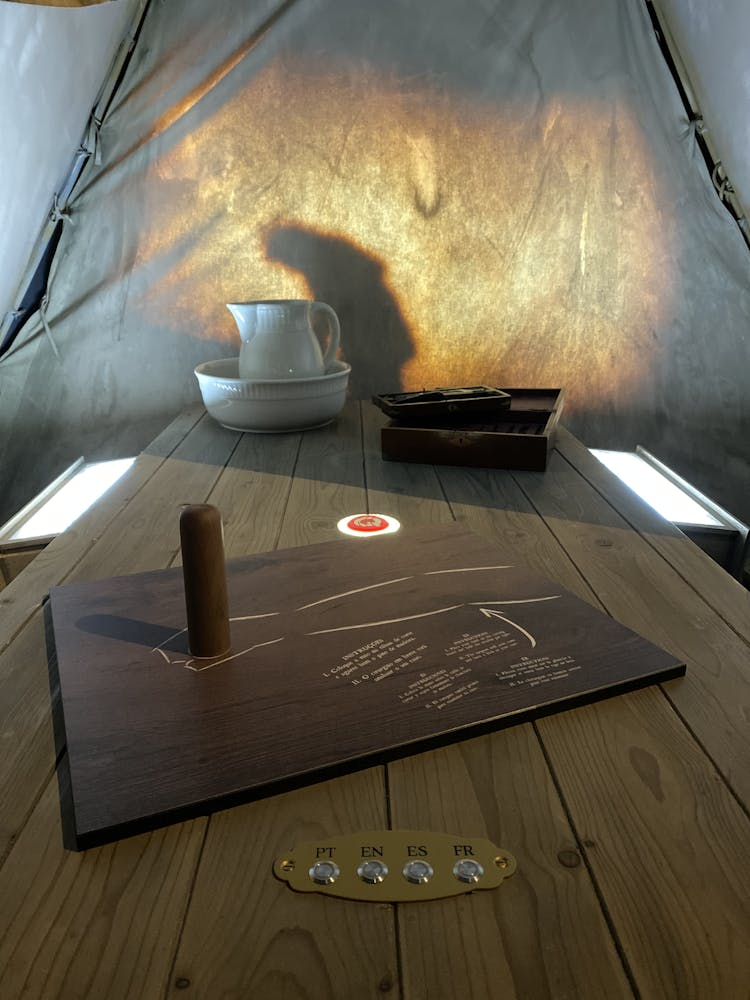
Room of Tales
Surgeon Bleeding Barber
Read more
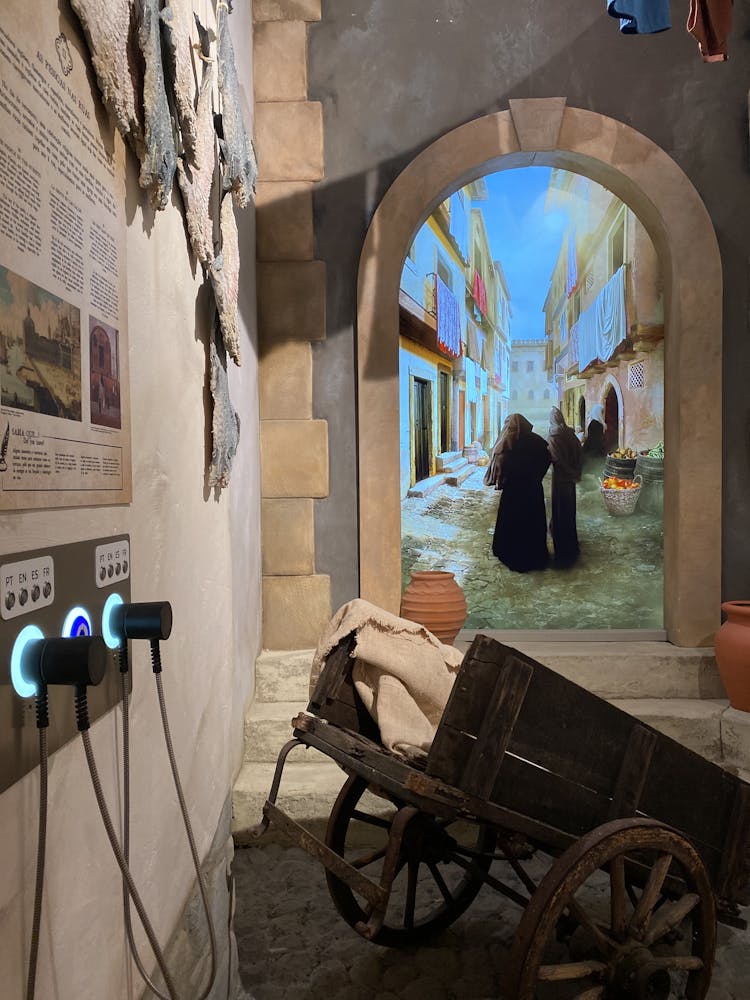
Streets of Lisbon
The people in the streets
Read more
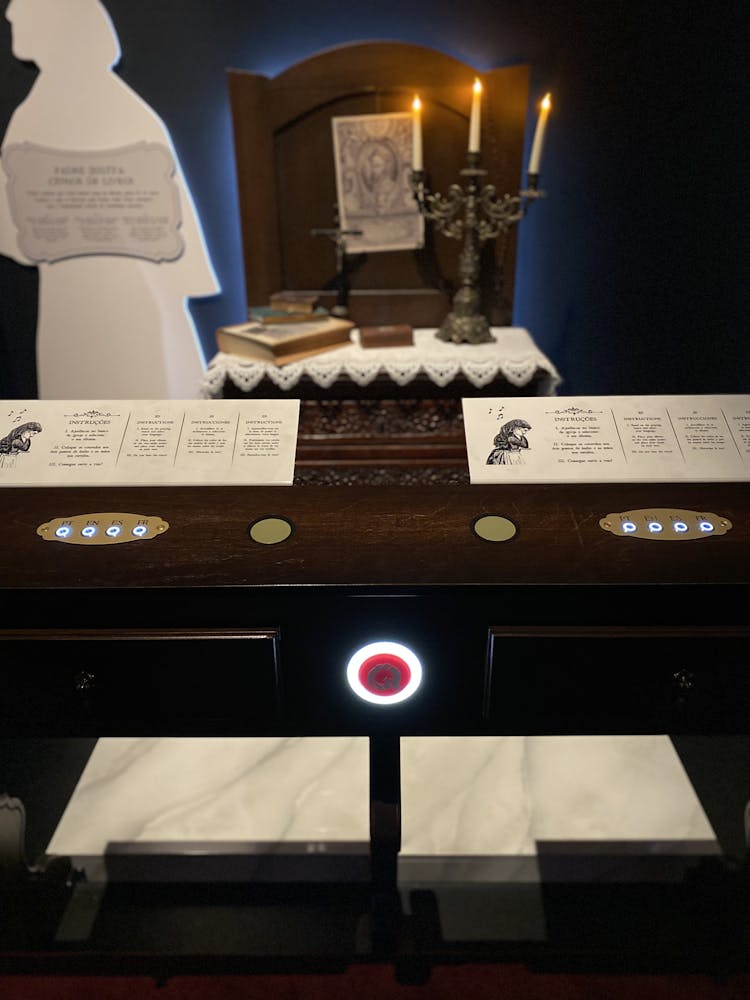
Room of Tales
Jesuit book censor Priest
Read more
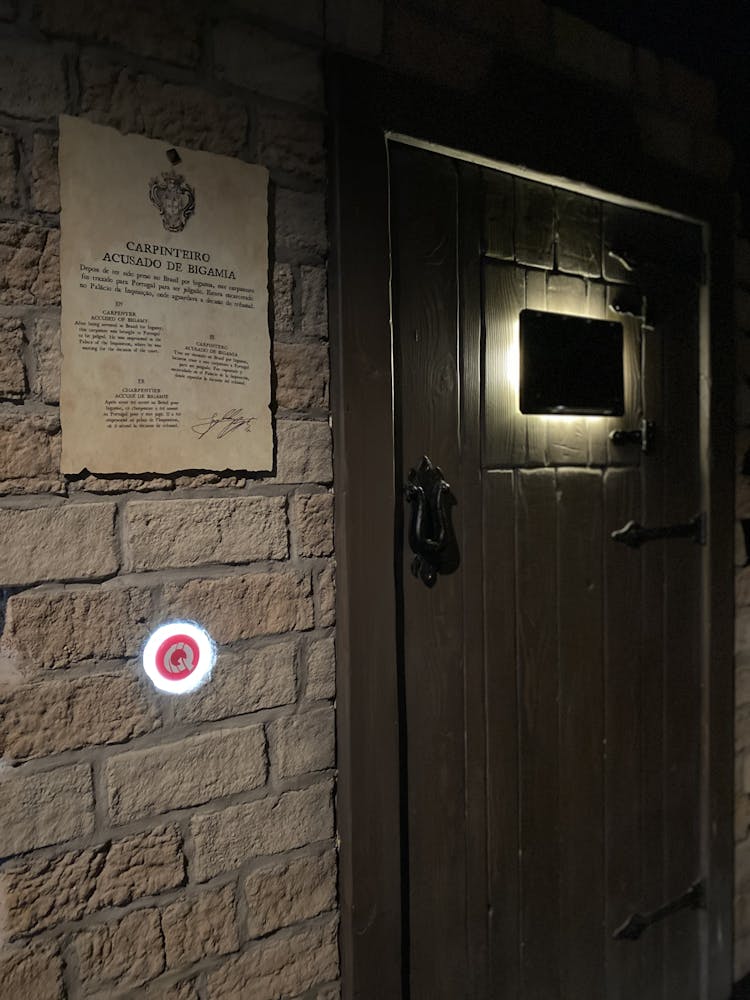
Room of Tales
Carpenter accused of bigamy
Read more
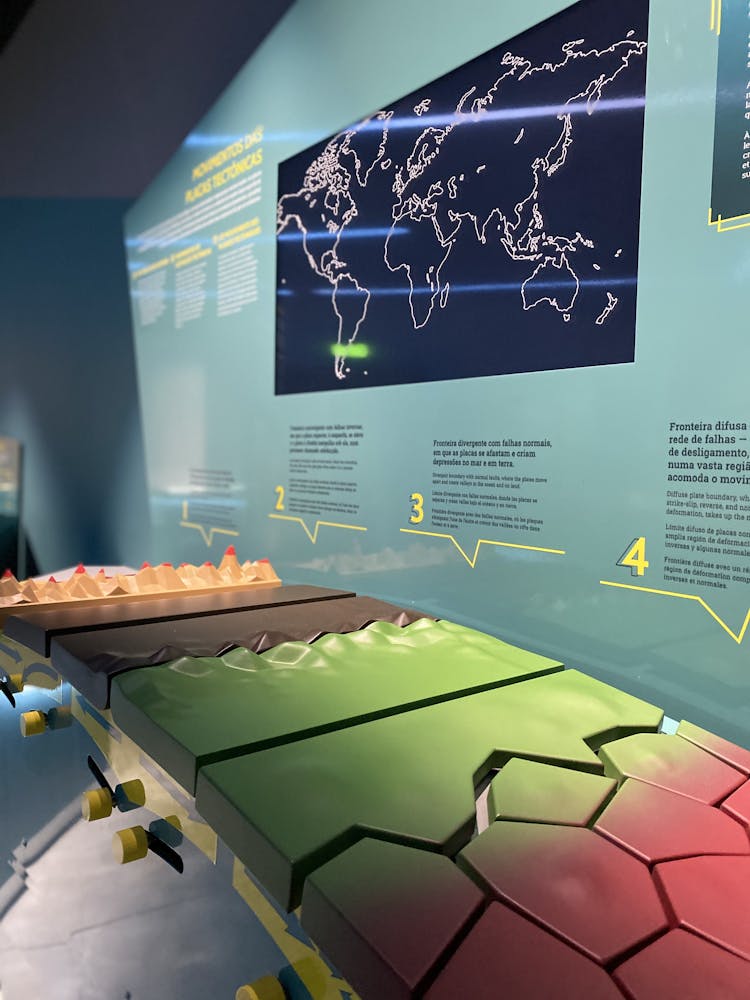
Training Centre
Tectonic Plates and Moving Plates
Read more
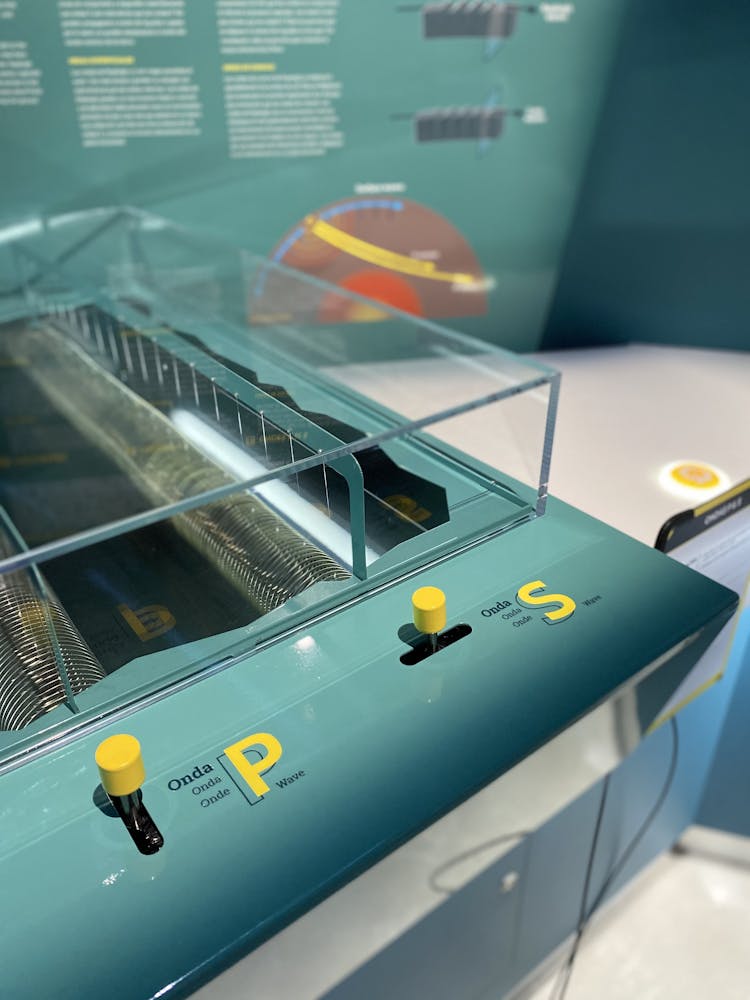
Training Centre
P&S Waves
Read more
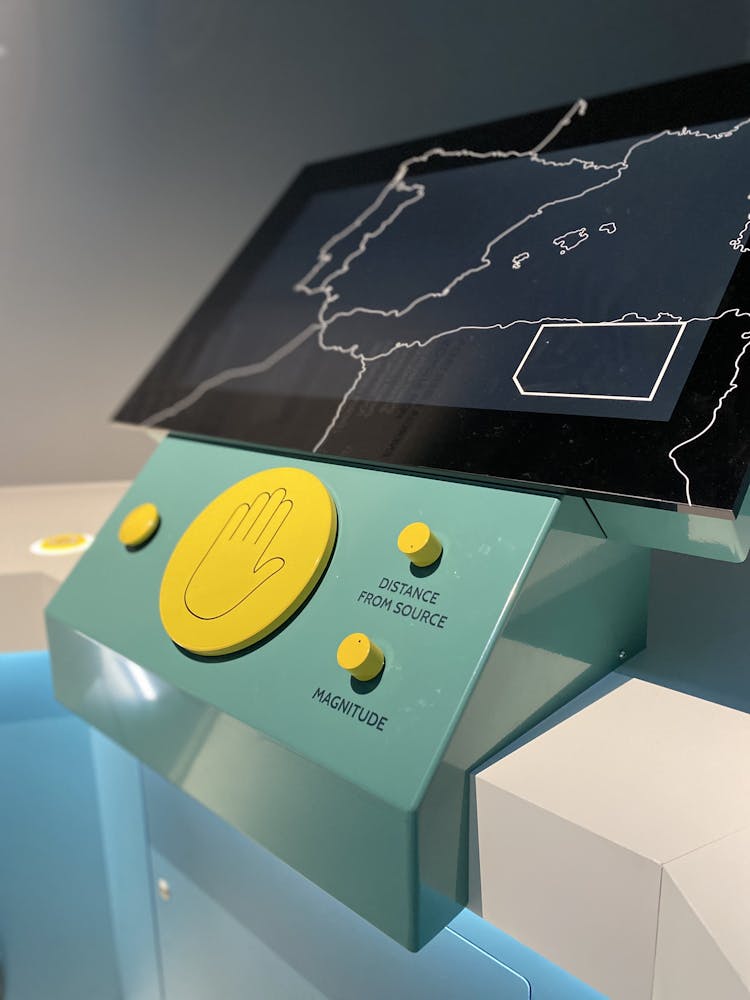
Training Centre
The Size of an Earthquake
Read more
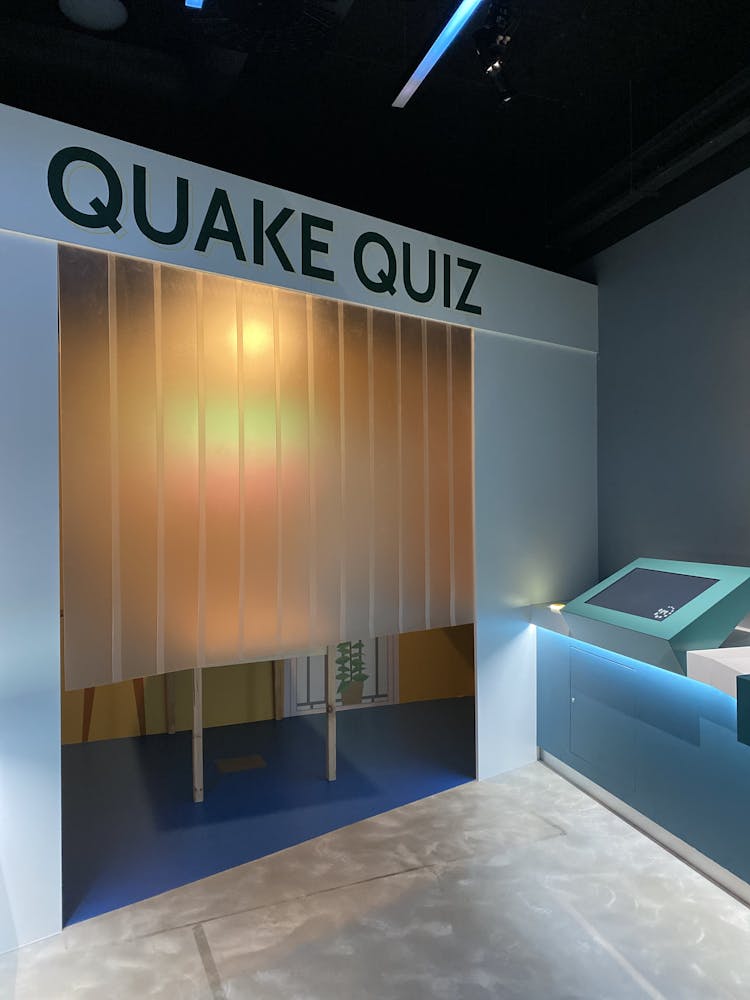
Training Centre
Are we prepared for the next one?
Read more
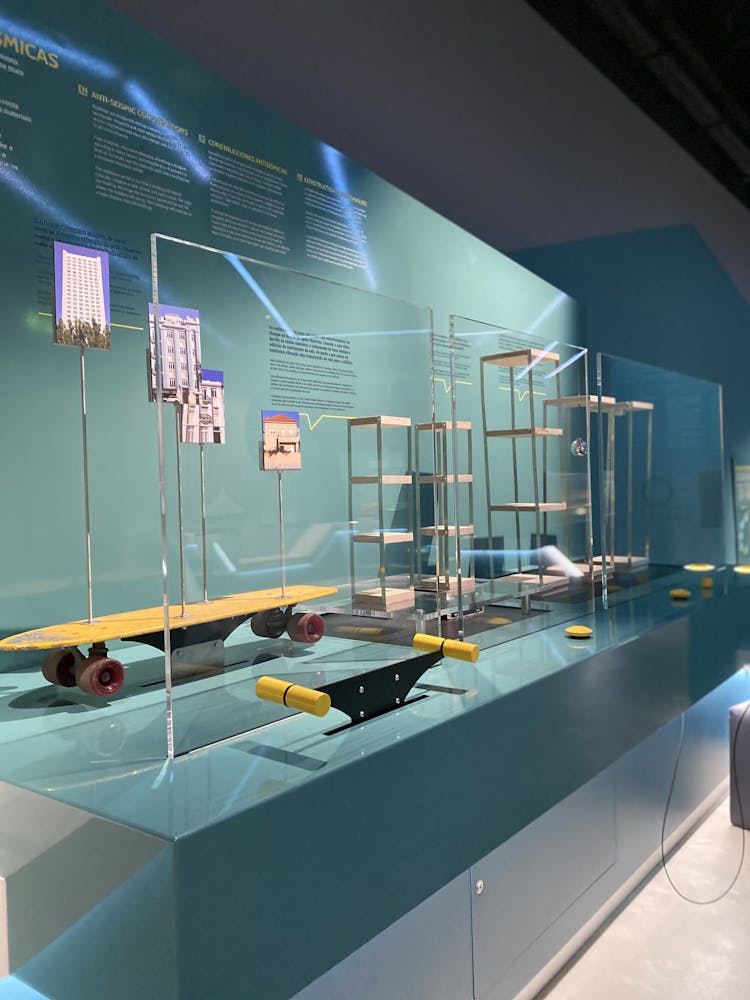
Training Centre
Anti Seismic Constructions
Read more
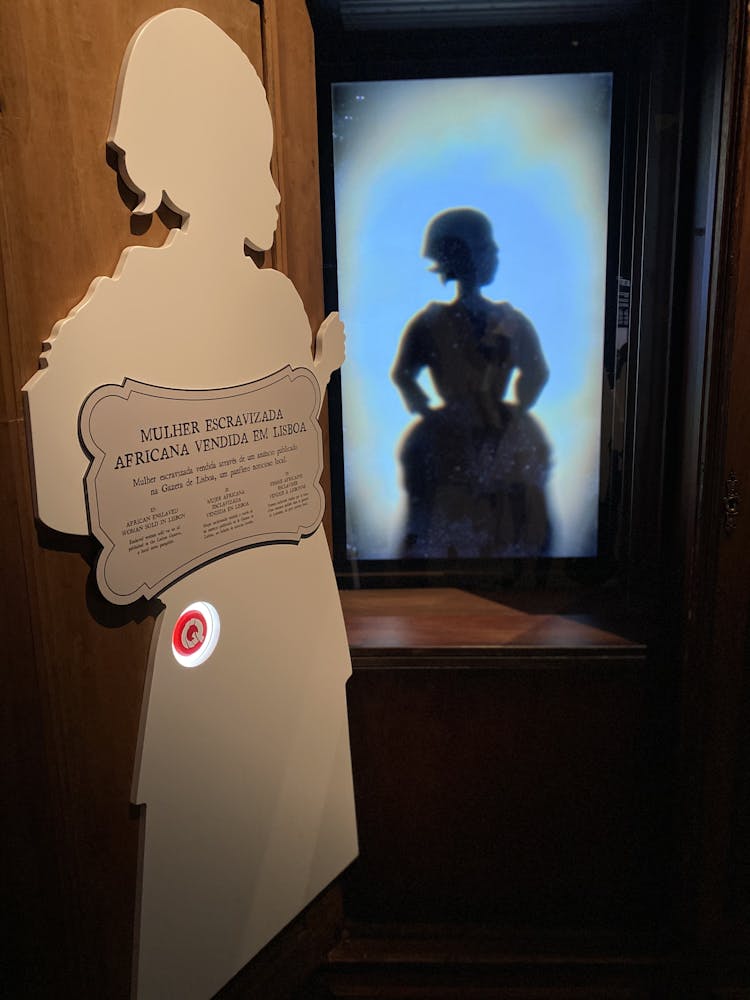
Room of Tales
African enslaved woman bought in Lisbon
Read more
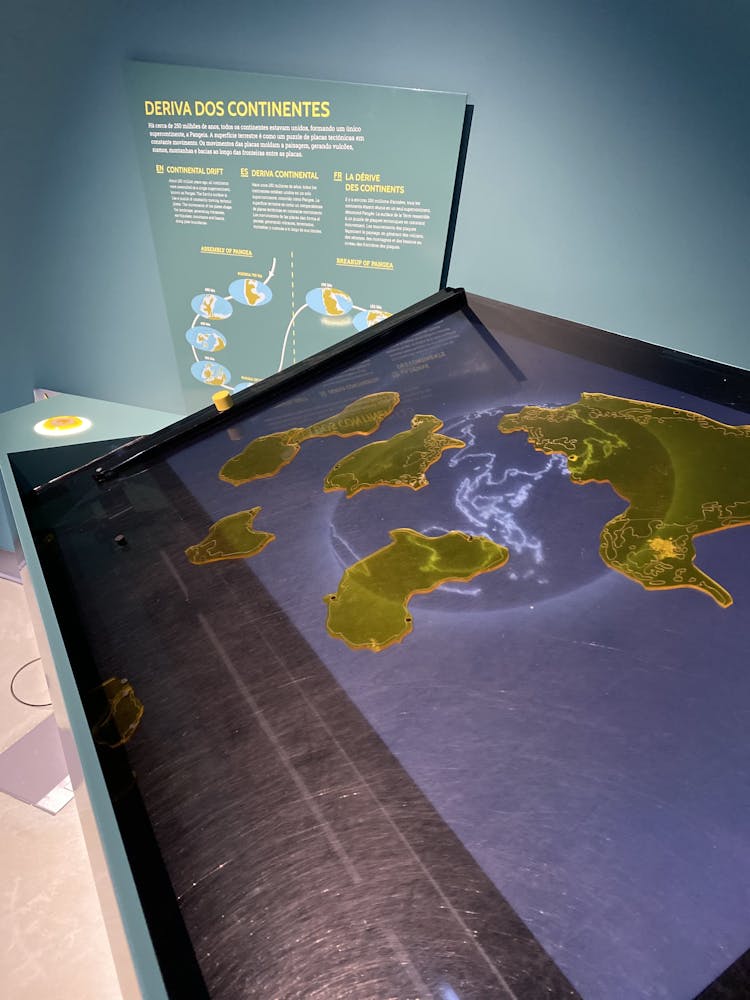
Training Centre
Continental Drift
Read more
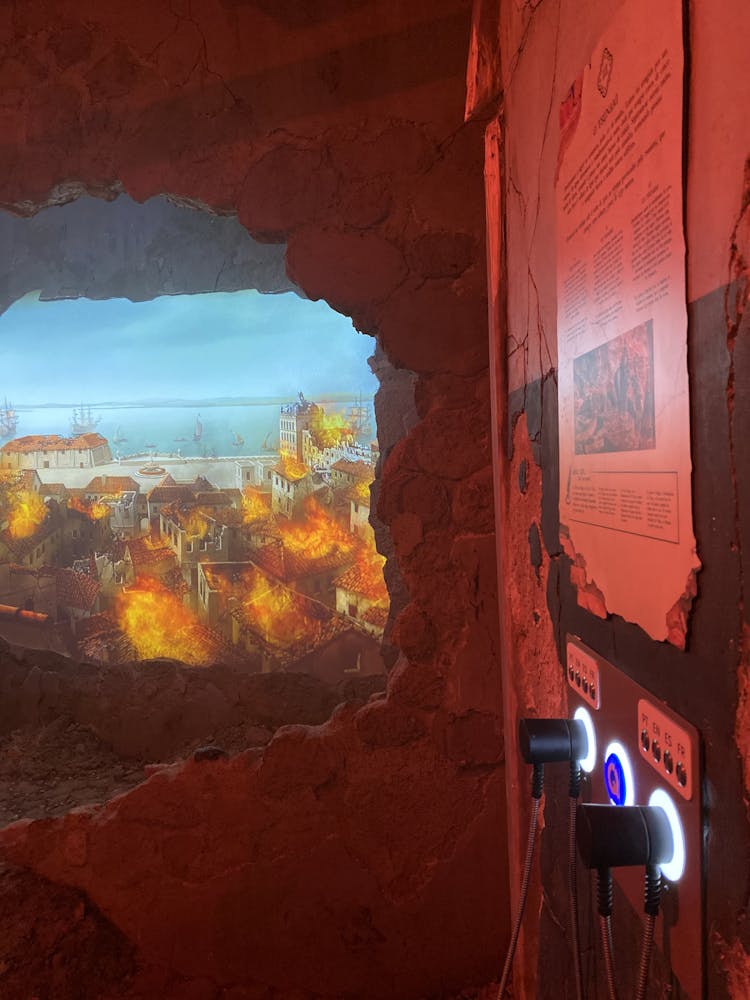
Tsunami and Fire
The Tsunami
Read more
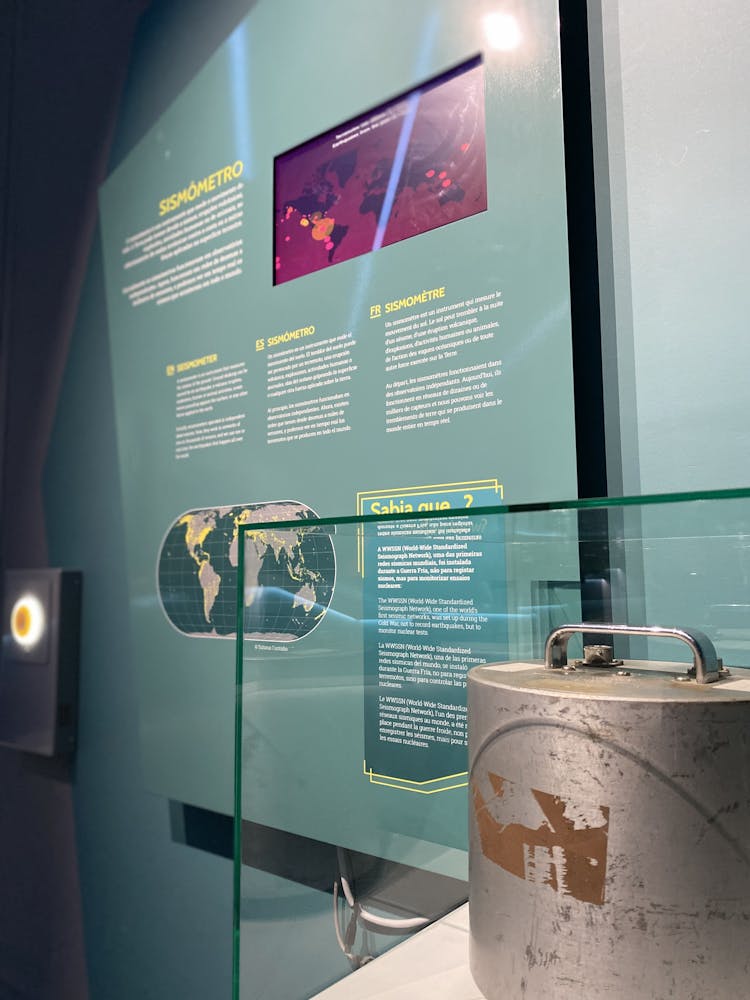
Training Centre
Seismometer
Read more
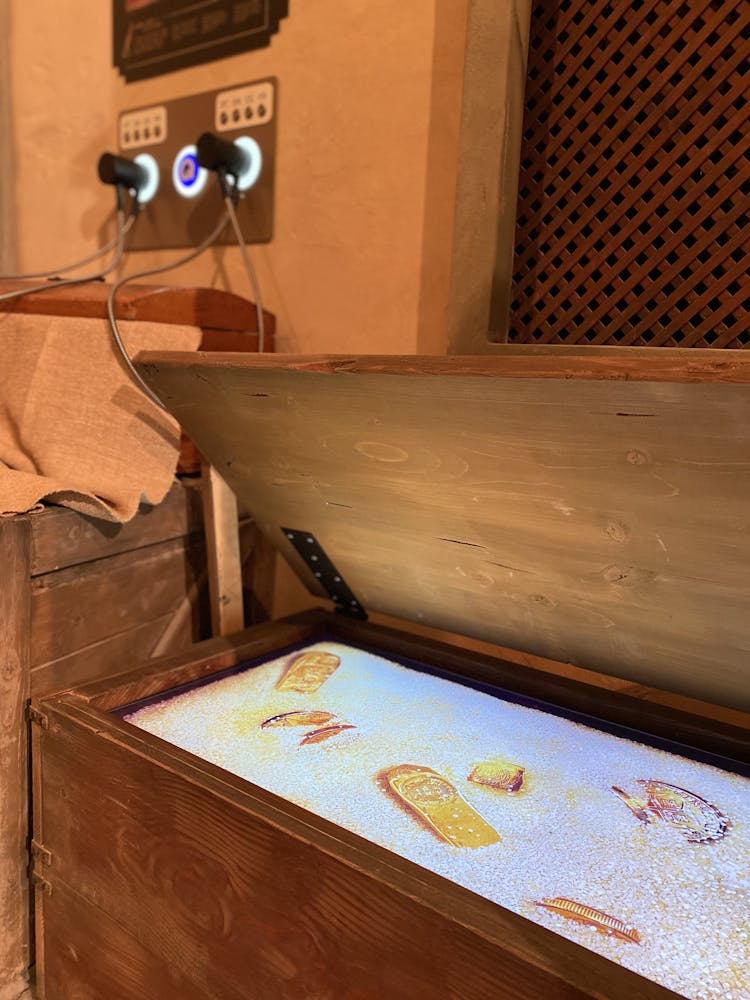
Streets of Lisbon
Richness of the city and gold smuggling
Read more
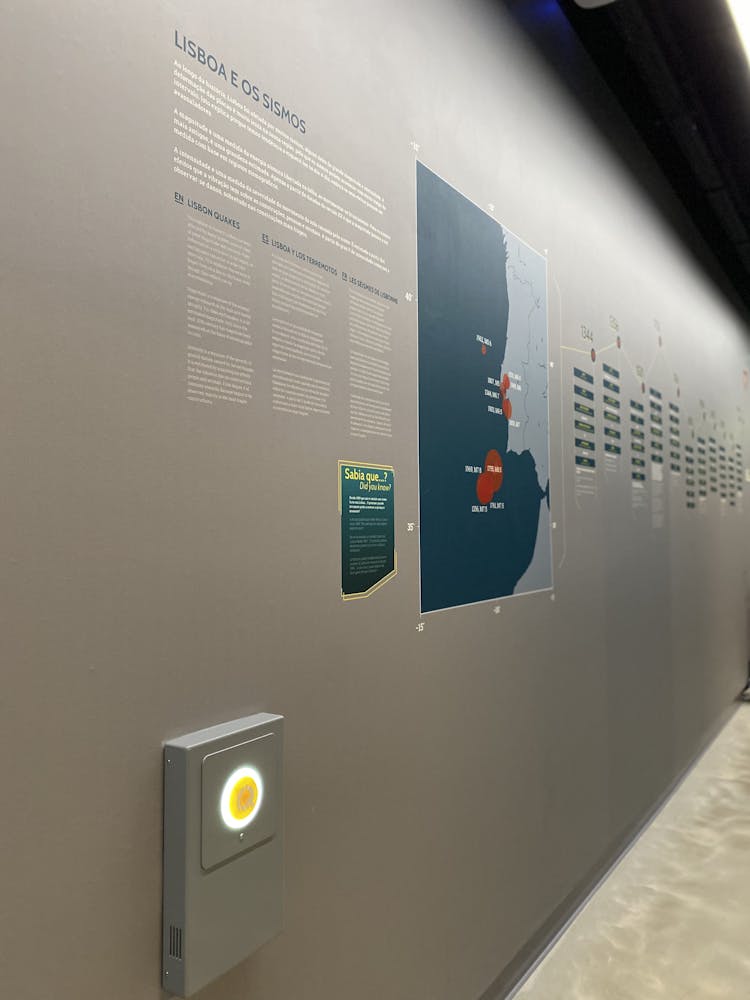
Significant Earthquakes
Portugal Tectonics and Lisbon Quakes
Read more

Tsunami and Fire
How the fires started and propagated
Read more
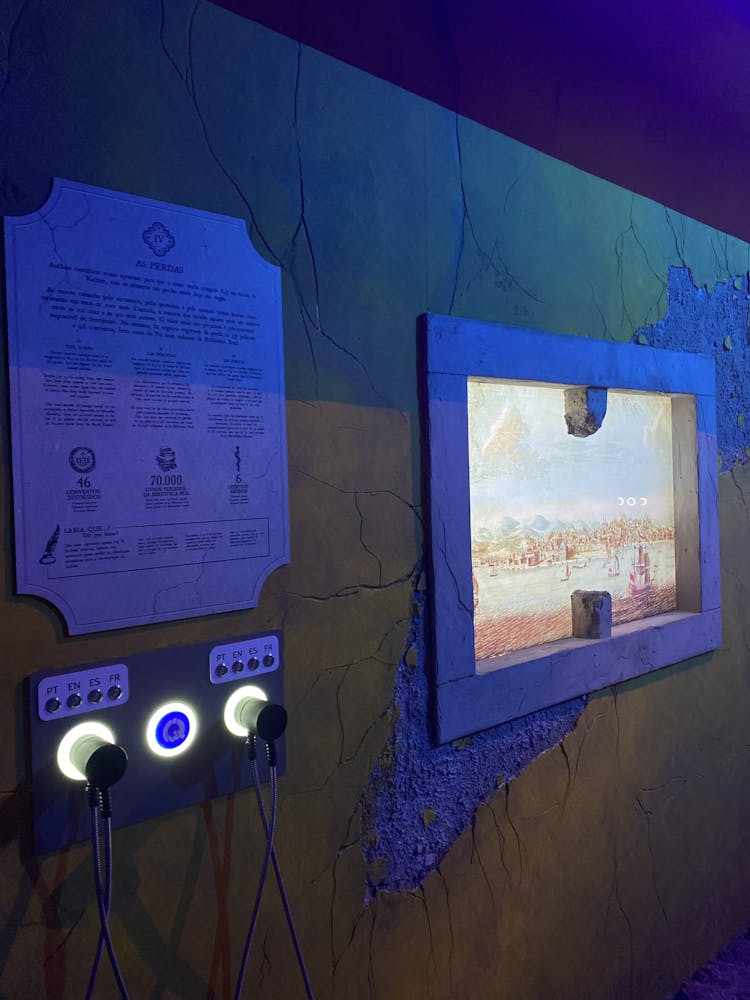
Tsunami and Fire
The losses
Read more
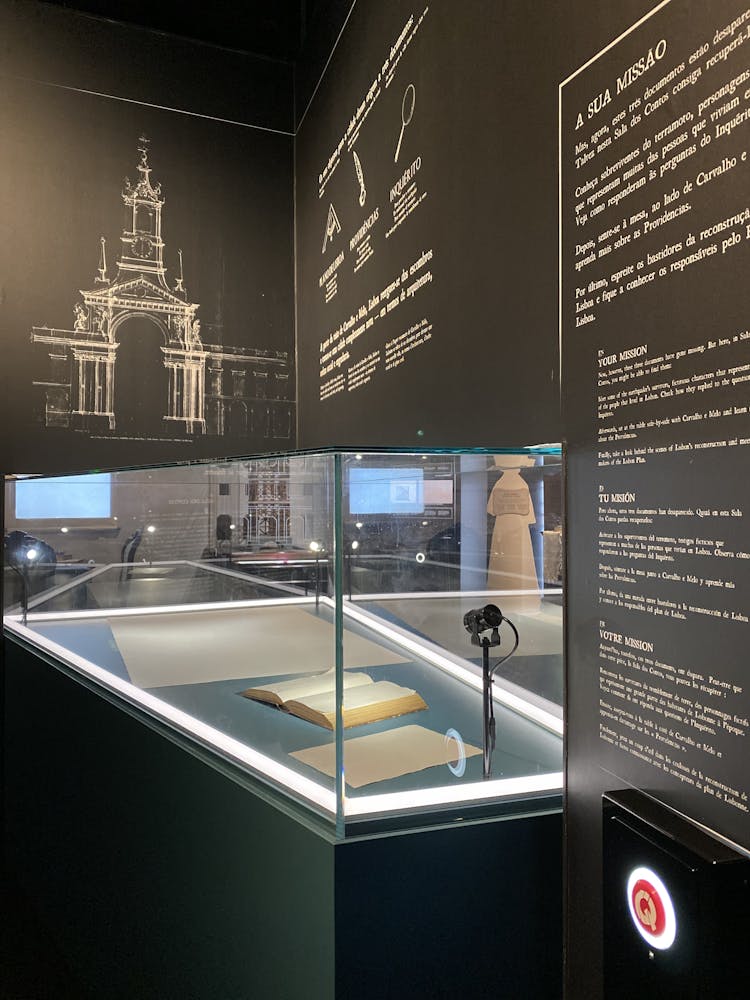
Room of Tales
The three missing documents
Read more
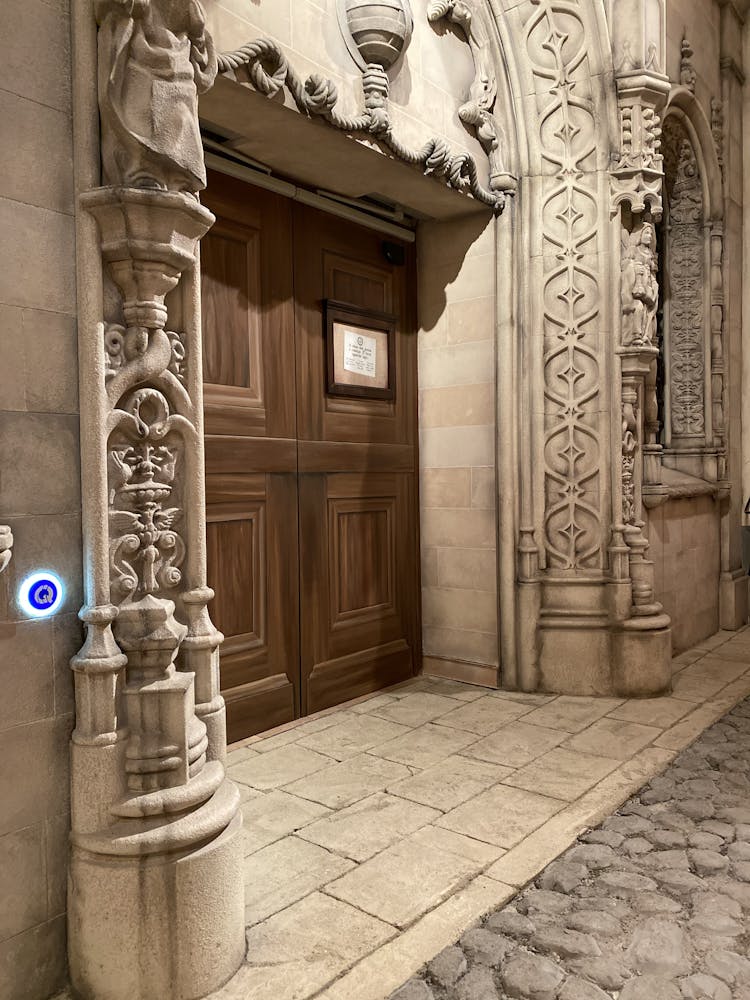
Streets of Lisbon
Traditional Rite Masses
Read more
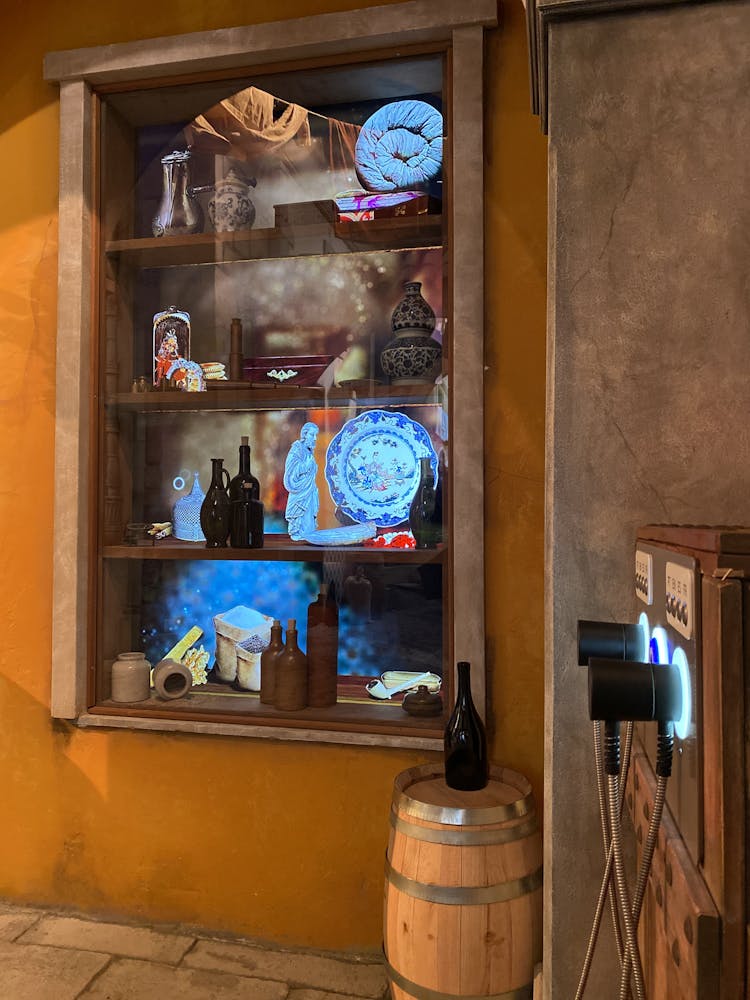
Streets of Lisbon
The connection with the colonized territories
Read more
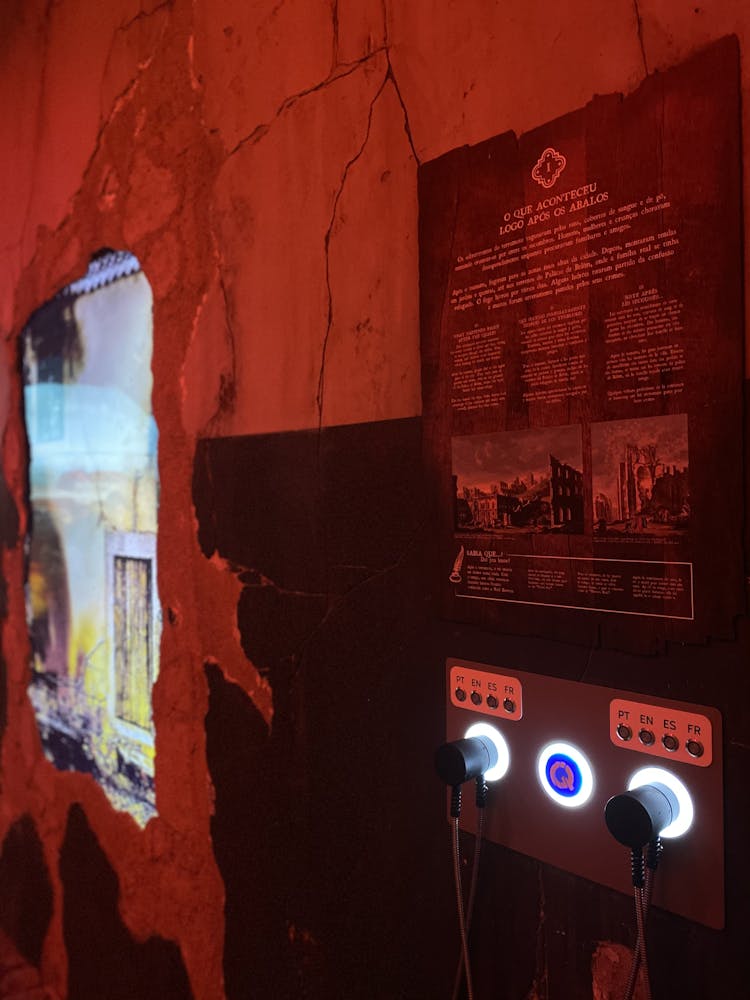
Tsunami and Fire
What happened right after the quakes
Read more
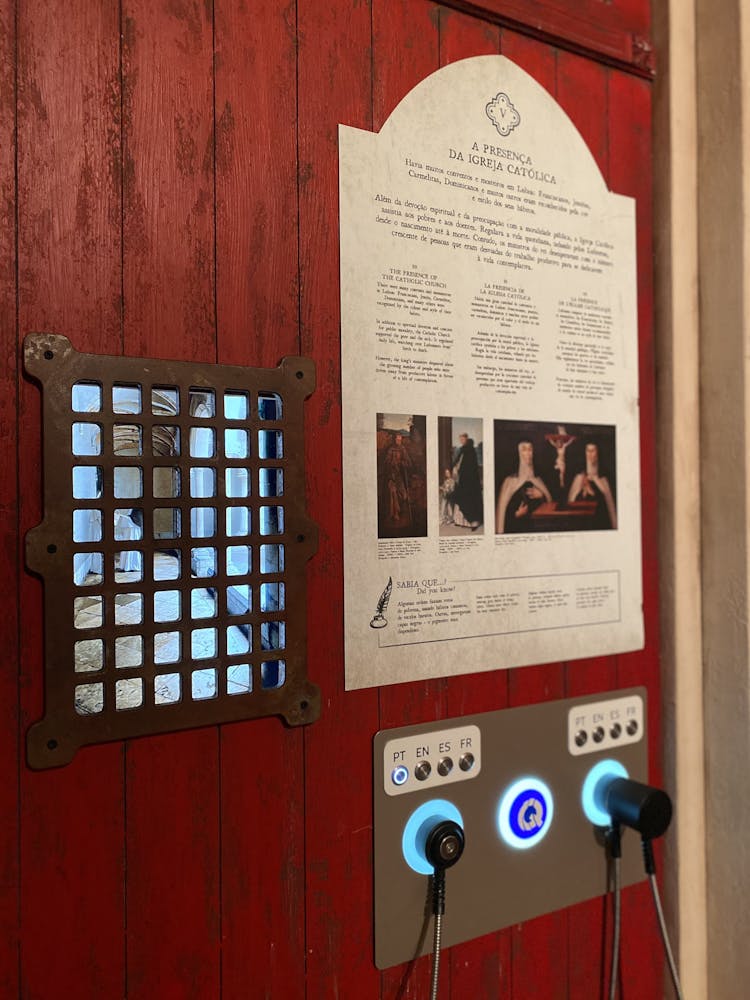
Streets of Lisbon
Presence of the Catholic Church
Read more
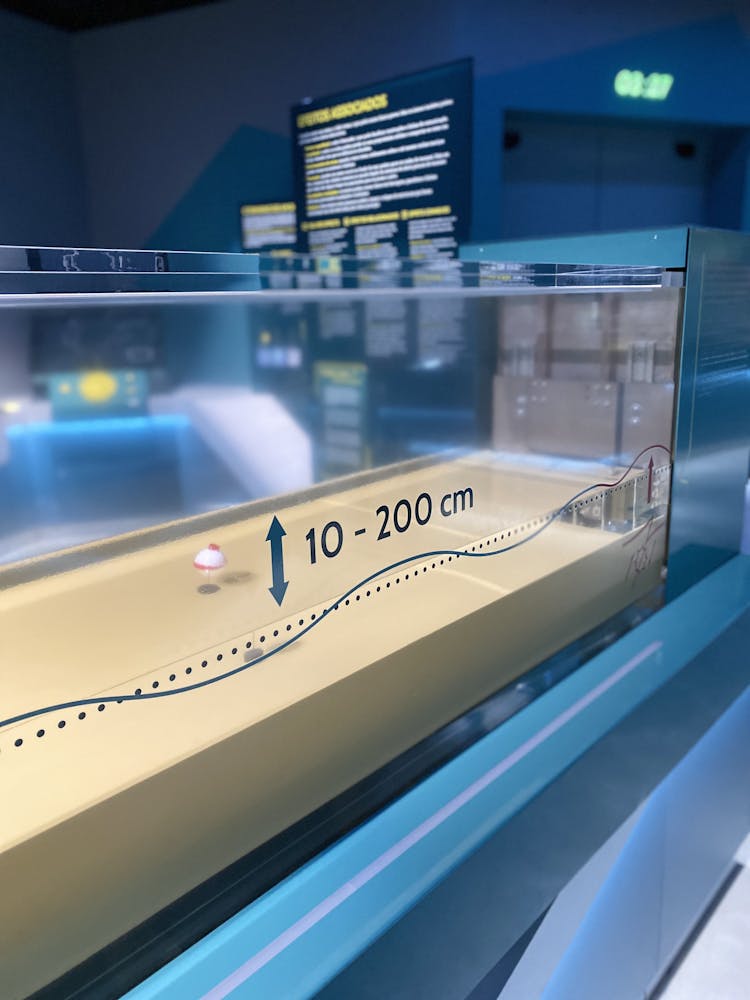
Training Centre
Related Effects
Read more
Room of Tales
The King's Ministers
Read more
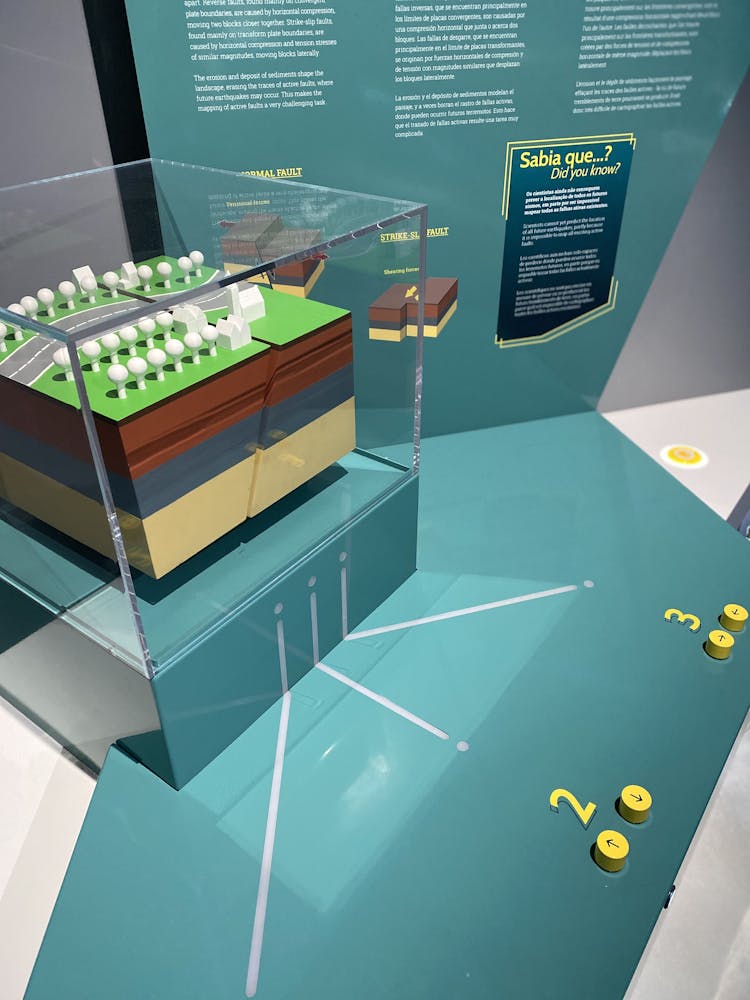
Training Centre
Earthquakes and Faults
Read more
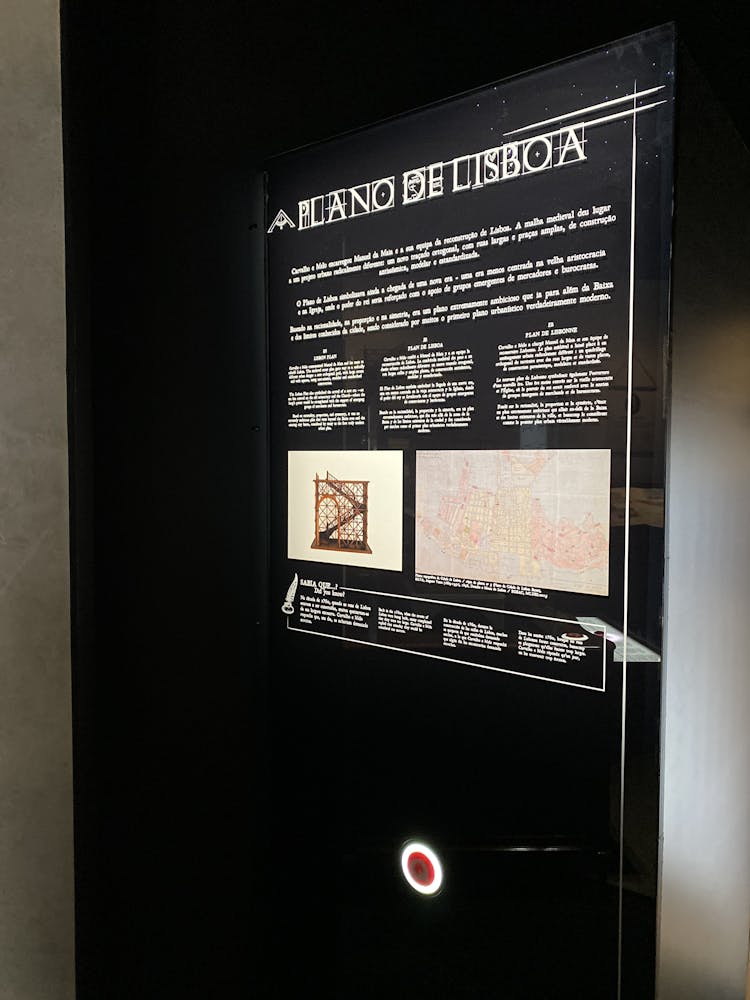
Room of Tales
Lisbon Plan
Read more
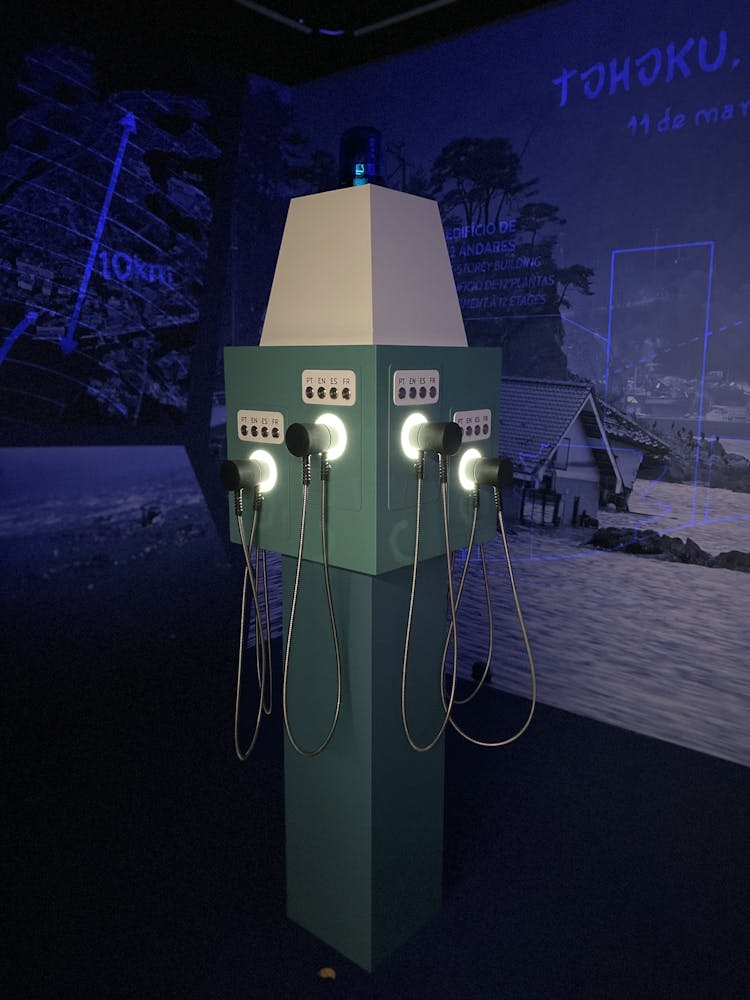
Significant Earthquakes
San Francisco and Tohoku
Read more
Room of Tales
Manuel da Maia's Studio
Read more
Room of Tales
Gaiola Pombalina
Read more
End Tunnel
Be prepared
Read more
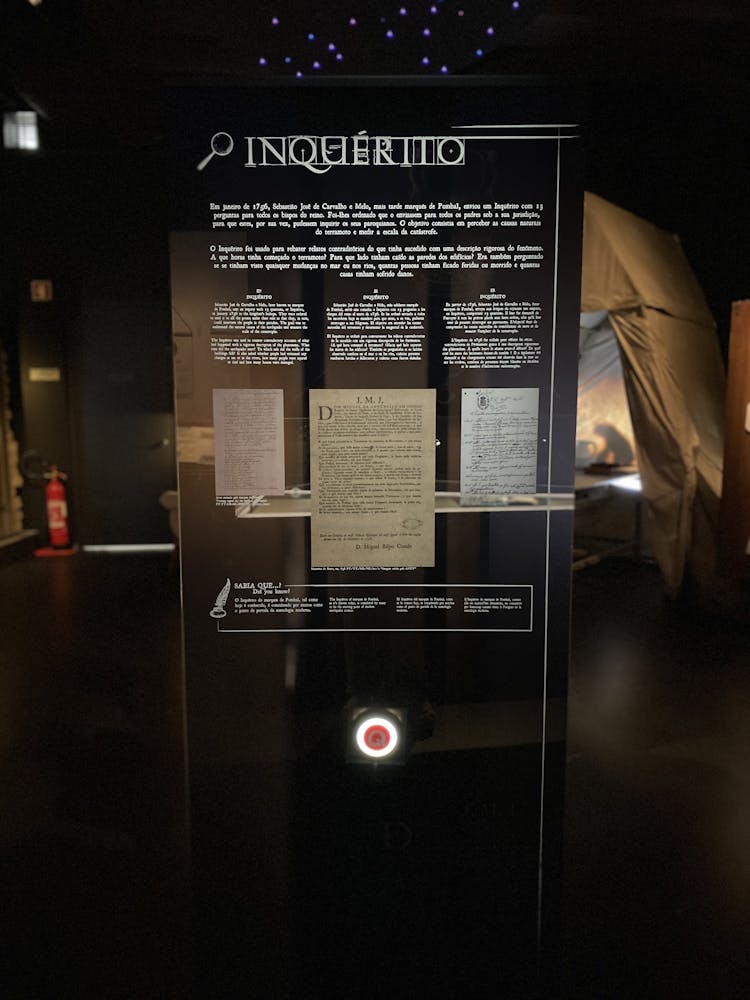
Room of Tales
Inquérito
Read more