


Share
Carvalho e Melo and Duque de Lafões asked Manuel da Maia, the kingdom’s chief engineer to assemble a team to present proposals to rebuild Lisbon. On 4 December 1755, a little more than a month after the earthquake, Manuel da Maia delivered the first of four dissertations explaining the different possibilities to rebuild Lisbon. Although there were five proposals, logic of reconstruction rested on three distinct ideas:
1 - Rebuild Lisbon as it existed before the catastrophe, introducing only minor improvements, such as reducing the height of the buildings. This solution was the cheapest and simplest, guaranteeing the owners the property rights exactly as they existed before the earthquake.
2 - Levelling the entire lower part of the city and using the rubble to flatten it, raising the buildings, although with height restrictions. This solution would allow for the creation of a sewage system and ensure the easy flow of tidal water back to the river by creating a slight slope from Rossio to the Praça do Comércio. It also included the design of wider streets and the reconfiguration of squares. But this solution posed some problems: redesigning the land and housing, negotiating new property rights, which implied inevitable conflicts.
3 - Focus on moving the city to Belém, as the area was the least hit by the earthquake. This could provide a clean start and space to grow. But this solution meant dealing with property owners who would need to leave houses and land in the Baixa area behind.
The king chose the third proposal and work immediately started on clearing rubble and levelling the land. Although today it is difficult to conceive this scenario, the downtown area was quite uneven, crossed by water courses, dozens of streets and lanes, alleys, squares, countless churches, in a medieval structure. Several streets connected Terreiro do Paço to Rossio, but none as wide or as straight as the ones that exist today.
Despite the precarious conditions, the reconstruction work was set in motion with remarkable diligence. Initially, the conditions in which the technical reconstruction office operated were extremely poor. Manuel da Maia, strategist of the Lisbon Plan, had lost most of his precious drawings, instruments, and books in the fire that followed the earthquake. At almost 80 years old, he was considered to be a very old man and on 1 November 1755, Manuel da Maia left the burning house and headed to São Jorge Castle, accompanied by some guards. Together, they removed a large number of crates full of documents from the rubble. He managed to save the national archives, which were kept at the Torre do Tombo, which was located at the castle at the time. Manuel da Maia was a religious man and because he took a vow of chastity at the age of twelve, he died without heirs. His entire life was dedicated to his work, having served a total of three Portuguese kings. In recognition of his services, he received the decoration of the Order of Christ. In the only oil portrait we know of, he proudly wears this cross on his chest.
Contrary to tradition, the project was not commissioned to great Italian or other renowned foreign architects, but rather to a national team of military engineers. In 1755, Portugal had a vast tradition of monumental construction and during the reign of King João V, major works were completed, such as the Convent and Palace of Mafra and the Águas Livres Aqueduct. For about 80 years of specialised work, the tradition of “Casas do Risco” (Public Works Draughting Offices) was developed in the great shipyards, where military engineers received their training and planned in detail building construction.
Manuel da Maia called in a team of military engineers for reconstruction, including Eugénio dos Santos and Carlos Mardel. Manuel da Maia considered them "besides being engineers by profession, the first architects in civil architecture". In addition to mechanical competence in engineering, they were versed in the principles of urban art, a complex discipline with Renaissance origins that had never ceased to be practised by some of the more erudite ministers. To organise the design and reconstruction of Lisbon, and like in every important construction in the kingdom, a “Casa do Risco das Obras Públicas” was created. Initially, this office, like other courts and institutions of the Court, must have functioned in improvised spaces. When the buildings on the west wing of the Praça do Comércio were ready, the Casa do Risco was given its definitive premises.
During the following years, the elite of military engineers, perhaps recognised for the first time in the history of architecture in Portugal, continued to work. Eugénio dos Santos, responsible for the general plan, implemented the serial architecture, a hallmark of the Pombaline reform, which is recognised today for its modernity, but which at the time was widely criticised for being monotonous and repetitive. This monotony created the conditions for fast, efficient and, until then, unseen mass production, at least on this scale, implementing prefabrication as a construction method. The other great architect, whose work intersected with that of Eugénio dos Santos, was the Carlos Mardel, of Hungarian origin, who had a more palatial, refined taste and who had a decisive influence in the most representative areas, namely Praça do Comércio and Rossio.
This new plan for downtown Lisbon was based on clear and ordering principles. Many houses, little damaged and in usable condition, were demolished to make room for the new grid. Although it is difficult to put a figure on the number of buildings demolished, observers compared the demolition effort to a second earthquake. In addition to the excruciating work of clearing rubble and levelling the land, the king's ministers had to supervise the reorganisation how properties were handled, expropriated or compensated for. This quagmire was widely documented.
The importance of hierarchy, the habit of teamwork, and the discipline inherent to the military profession proved essential to the success of the reconstruction of Lisbon. The idea that every decision had to be backed by an overall strategy, something that today would be considered perfectly normal, was totally new at the time. Mobility, standardisation, and efficiency were key concepts of the final design.
Through the prompt reconstruction, led by the military engineers, Carvalho e Melo intended to send a message to the groups that opposed his political ideas. The king's government continued to function and respond to the kingdom's needs, turning the disaster into a reorganisation of institutions and the court. Carvalho e Melo used the reconstruction of Lisbon to change the urban landscape and reconfigure the political symbols. A good example was the change of the old concept "Terreiro do Paço" to Praça do Comércio, emphasising the emerging class of merchants and merchants, linked to Carvalho e Melo. The centrality of business corresponded to a trend already evident in the great European capitals, where the stock markets had been the political and economic heart of kingdoms and republics since the end of the 17th century. The fusion between the magistracy and the big businessmen would give rise to a government less marked by formal criteria of justice, a more functional government dependent on the political will of the secretary of state.
Many nobles refused to rebuild in Lisbon as it lacked the architectural pomp and circumstance they were used to. The old Lisbon, with its intricate splendour, was lost forever. When the king himself decided not to come back to his old quarters and donated his property to the city, nobles were in a much weaker position when it came to protesting against the changes. In the new Lisbon, the visual presence of the Church was also diminished, as churches that did not follow the new architectural principles were not allowed to be built and bell towers were not (re)built. This dramatically changed the city’s skyline. Even the Inquisition Palace in Rossio, though promptly rebuilt, saw its characteristic imposing features diluted in the new city centre design.
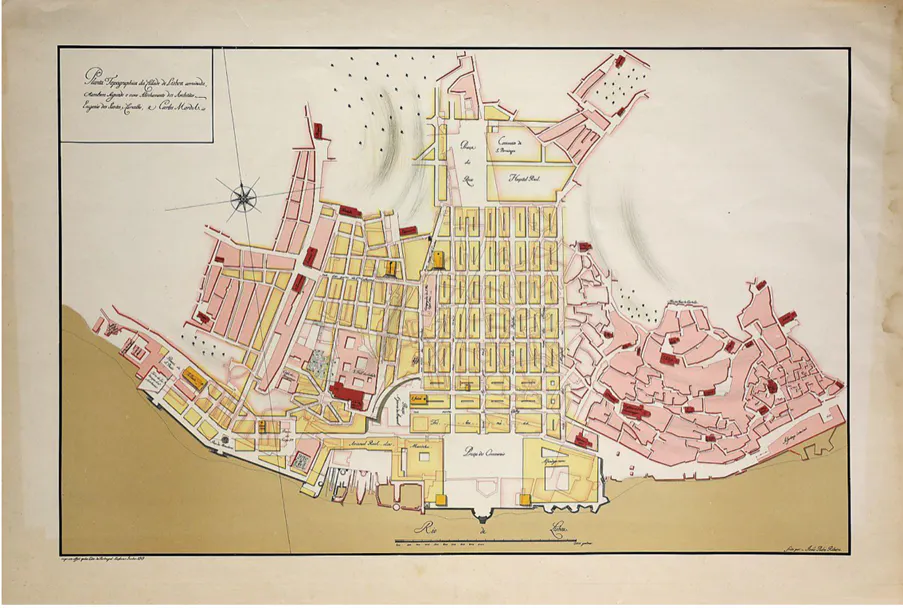
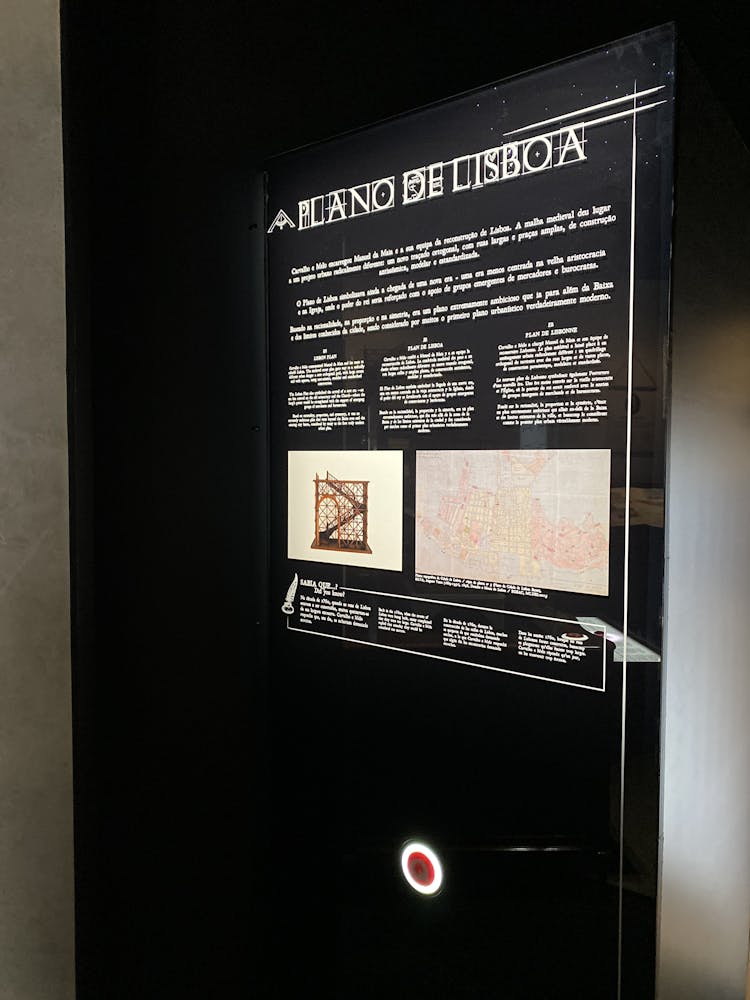
Topographic plan of Lisbon - in pink the streets of Lisbon before the earthquake and in yellow, the new urban alignment, with the new layout of the streets and the new buildings: an orthogonal plan, with wide streets and squares. engraving, from 1949, perhaps the best-known representation of the Lisbon reconstruction plan, is a copy of the 1758 original and is in the Museu da Cidade in Lisbon. This engraving represents the plan chosen from the various proposals presented by the three initial teams to which Manuel da Maia, the kingdom’s chief engineer, requested the creation of projects to rebuild the ruined city. All the projects had to propose the improvement of the city, taking into account the safety of the buildings, the hygiene of the streets and the dwellings. These three initial teams were made up of military architects/engineers, and headed by Captains Elias Sebastião Poppe, Eugénio dos Santos and the adjutant Gualter da Fonseca. The plan chosen was that of Captain Eugénio dos Santos, dated 12 June 1758.
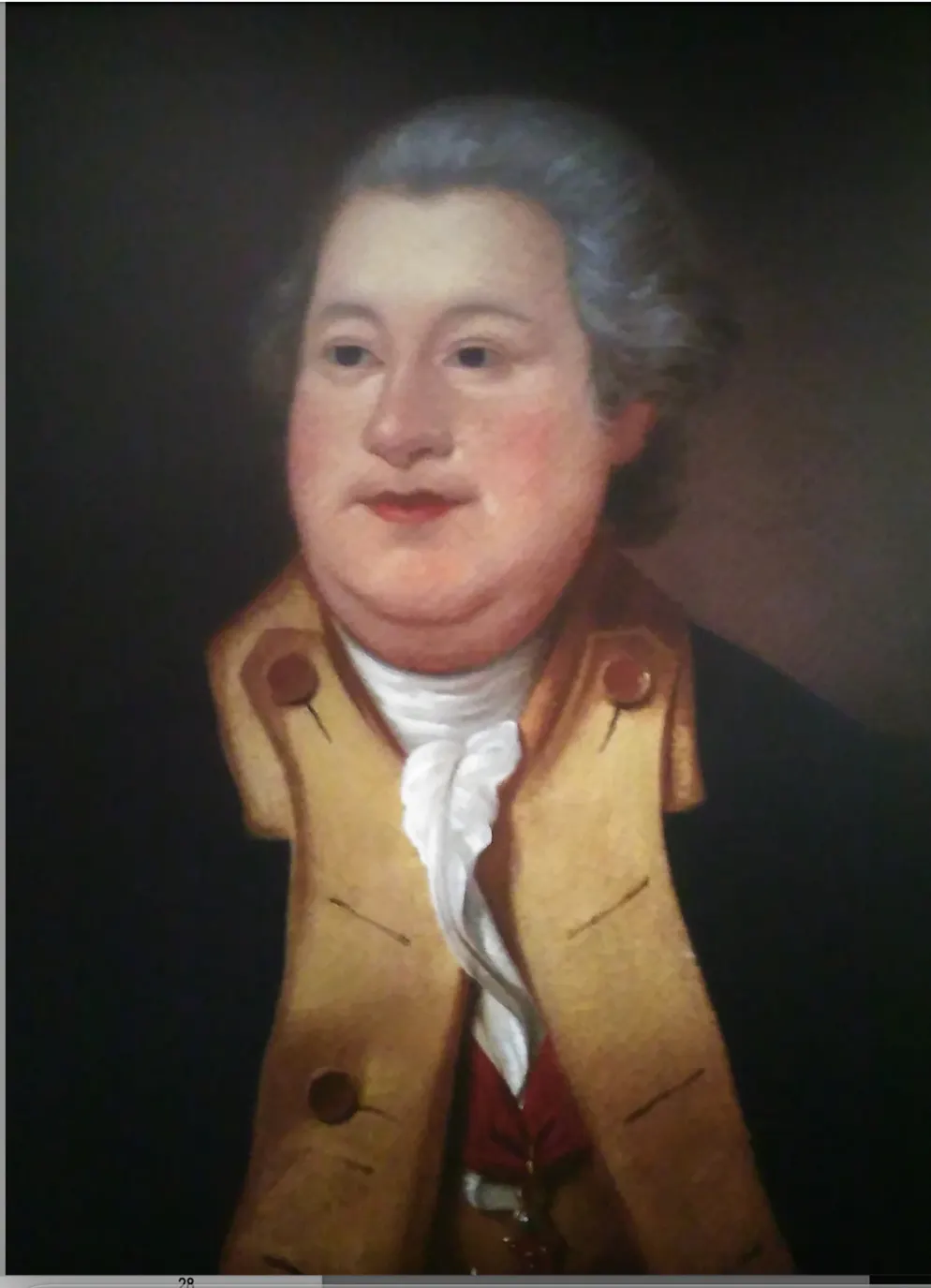
Manuel da Maia (c.1677-1763) was in charge of the general strategy and design of the reconstruction plan. He started working as an engineering assistant at the age of 18 and later taught at the Forts Building Class. He took part in the construction of two of the most emblematic buildings of the time: the Aqueduto das Águas Livres, a Lisbon landmark, and the Mafra Convent and Palace. He dedicated his life to his work, serving under three monarchs and died without descendants.
About the "Dissertation" and its importance for the reconstruction of Lisbon, the introduction to the text of the kingdom’s chief engineer by Cristóvão Aires, in "Manuel da Maia e os engenheiros militares portugueses no terremoto de 1755" (Imp. Nacional - 1910) , which suggests the existence of initial plans drawn by Manuel da Maia himself, of which today unfortunately the whereabouts are unknown:
"Here is the work presented by Manuel da Maia that, although unclear from a literary point of view, honours and justifies the high reputation of the engineer, because it represents a whole complex plan of works, of grounding, of sewers, of hygiene, of alignment of streets and lanes in the parts of the city to be reconstructed or built again, of construction of public buildings including the Royal Palaces, the Library and the Customs and also private ones in the proper conditions of safety against earthquakes and fire insulation; of the form of the buildings, without covered passages to avoid nocturnal assaults; of the safeguarding of the land destined for military easements next to the city fortifications, of so many other important issues that it is curious to follow among the tangle of the prose of the illustrious military man and which, as we have seen, gives him the primacy of many initiatives that were not attributed to him. The third part of the Dissertation is very interesting because it deals with the cleaning services of the city, sewers, water supply, fire hydrants, reconstruction of the buildings of the Terreiro do Paço, width and structure of the streets, similar to those in England, with the respective plans drawn by Manuel da Maia, and that is a pity we do not know where they stop, to see if they were really followed, when such buildings and streets were made".
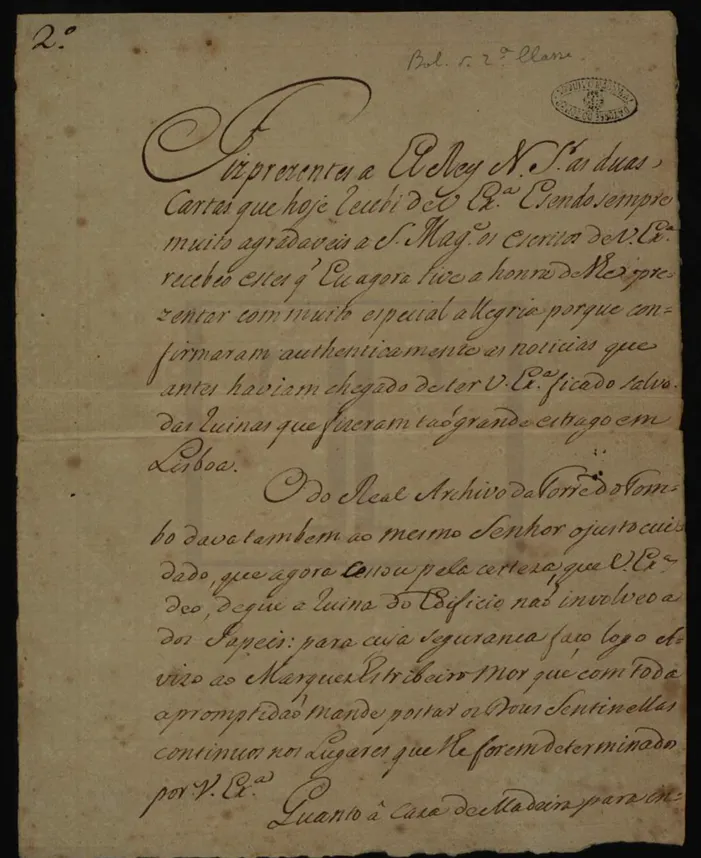
Letter that the Secretary of State Sebastião José de Carvalho e Melo wrote to Manuel da Maia, five days after the earthquake, in reply to two others that the the kingdom’s chief engineer had written to him, probably informing the king about the rescue of the documents from the royal archives of Torre do Tombo and asking for financial support for their storage. Carvalho e Melo assures the kingdom’s chief engineer of the royal financial support and adds a note of satisfaction of the King D. José with this (heroic) action.

The Águas Livres Aqueduct, a monumental work begun in 1732, marked the reign of King João V. It would alleviate the capital's water supply problems - an issue that had always been much discussed in the city, but was more urgently addressed by the senate of the city council from the beginning of the 18th century. At the time described in France as "the most magnificent and sumptuous undertaking of its kind", it is one of the most remarkable works of hydraulic engineering ever, stretching some 59 km from its source, 2 km from Belas, to Mãe d'Água das Amoreiras, including the branches. Manuel da Maia was involved in its construction, as was Carlos Mardel. Worthy of mention are: the Alcântara Valley Arch, with 35 arches (21 full and 14 broken), the Amoreiras Arch, in the form of a triumphal arch and Mãe d'Água das Amoreiras, a reception reservoir. In operation since 1748, it was deactivated in the 3rd quarter of the 20th century and reopened to the public in 1986. It can be visited as part of the EPAL Water Museum in Lisbon.
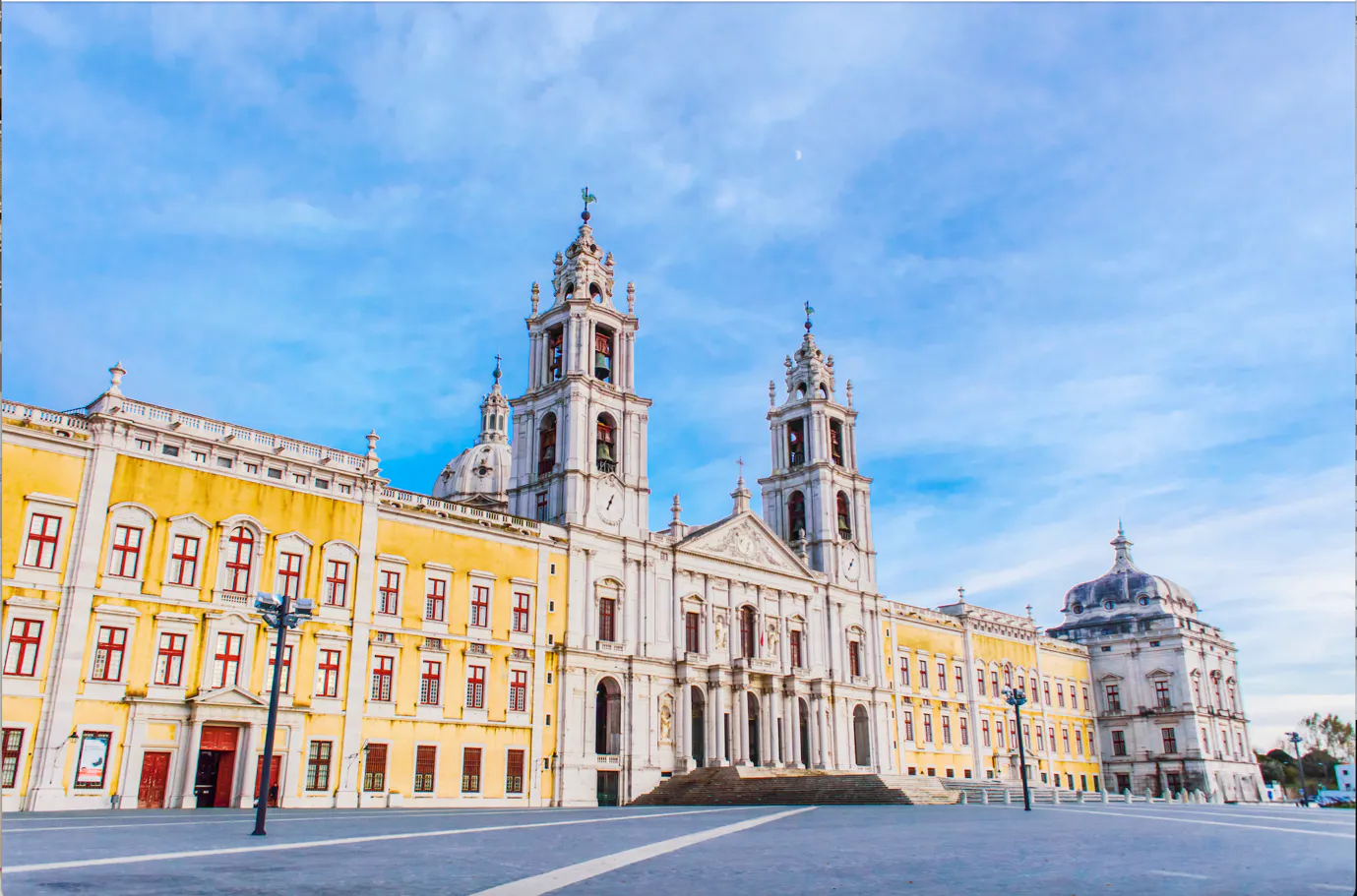
The monumentality of the work on the Convent and Palace of Mafra gave rise to one of the great building sites of the King João's reign (1706-1750), a veritable practical school ("the school of Mafra works") through which many professionals passed, such as Manuel da Maia and Eugénio dos Santos. When the earthquake hit Lisbon, Portugal already had about 80 years of strong building tradition, with about three generations of military engineers involved in this technical and practical work. But it was not only engineers who consolidated their professional status during this period. Just think of the hundreds of specialised bricklayers, stonemasons, cabinetmakers and carpenters, not to mention painters, locksmiths - professions that were often passed down from father to son, passing on knowledge and technical improvement. Despite informal schooling, stonework became very sophisticated, as can still be seen today in the convent's decorative profusion: fluting, acanthus, festoons, acroteria, garlands. King Dom João V, Dom José's father, dreamed of greatness, which led to emblematic works (Patriarchal Church, Águas Livres Aqueduct, Mafra Palace), later criticised by economists, but also helped to recognise and give prestige to the profession of military engineer. When disaster struck Portugal, the kingdom was prepared for reconstruction, in practical, theoretical and moral terms, which partly explains the speed and ambition of the reconstructive plans.
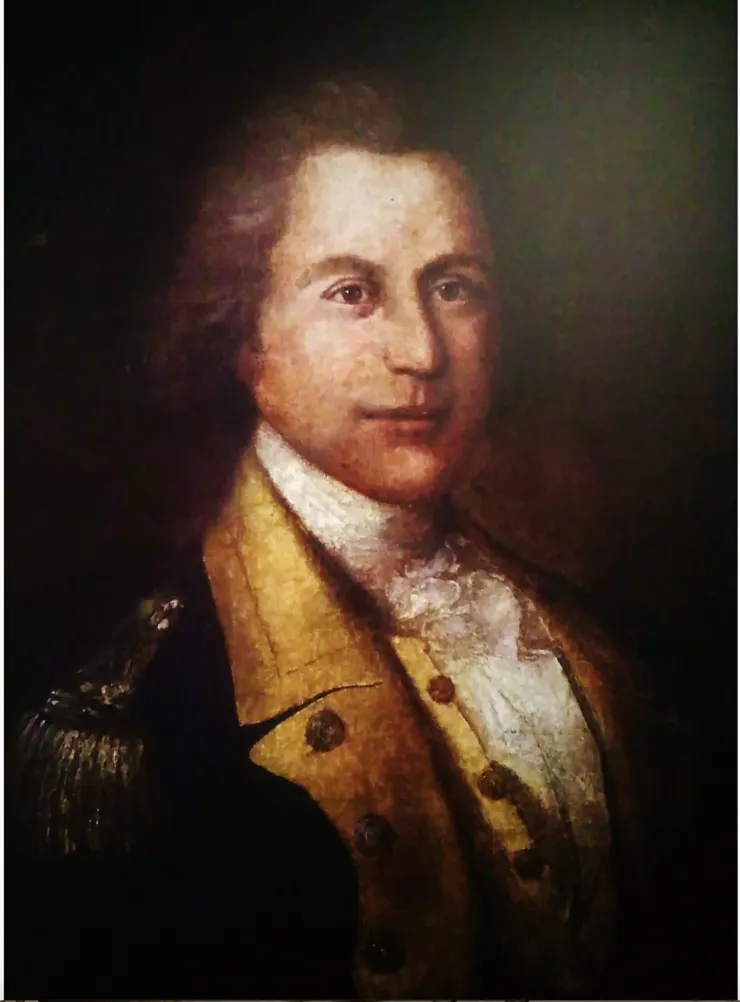
Eugénio dos Santos (1711-1760) was the son and grandson of masons. As a student at the Forts Building Class, he worked on the Mafra Convent and Palace and later under Manuel da Maia for the construction of the Hospital of Caldas da Rainha. After the earthquake, he became the director of the Public Works Drafting Office. Pragmatic and fully committed, he is credited for being the main drive behind the use of the standardized architecture of the Pombaline reforms.
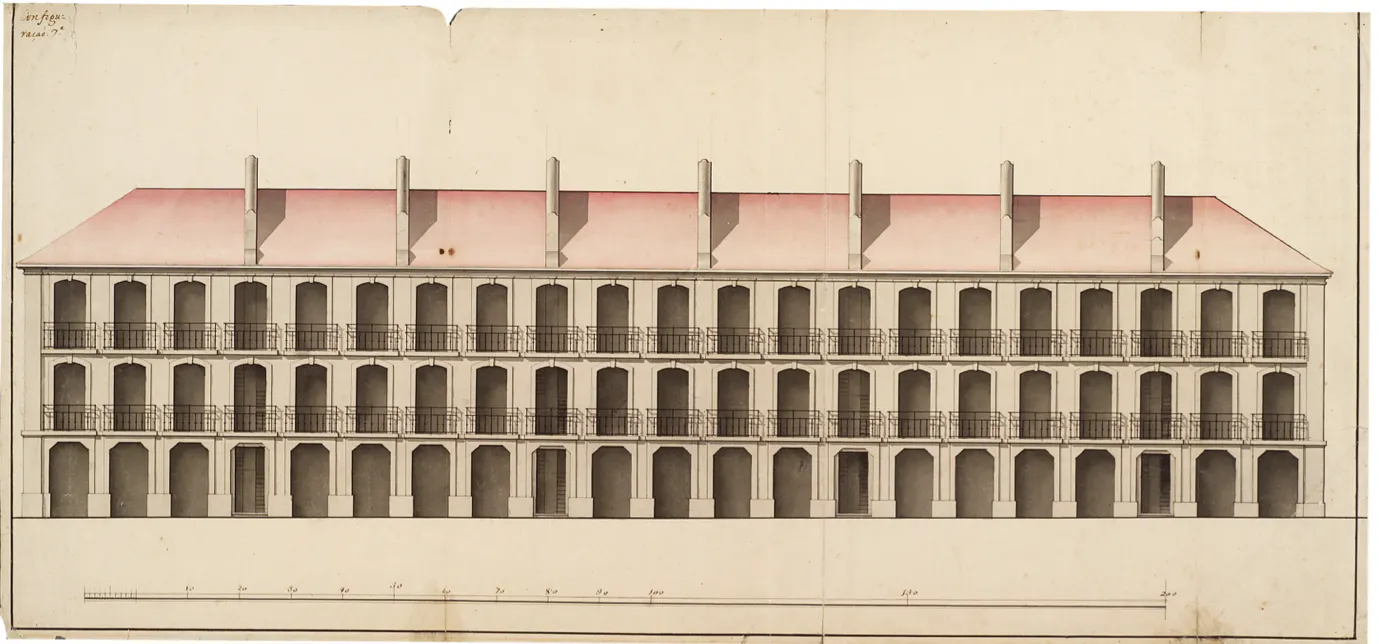
The buildings were constructed using a wooden structure called a gaiola (“cage”), which resists earthquakes. Firewalls were also introduced to avoid fire propagation – in this drawing you can see them sticking out directly from the roof, dividing the buildings. It became apparent that the cost of installing a sewage system in every home was too high, but the city’s improved sanitation upgraded the conditions in the Baixa District considerably. Before the earthquake, Lisbon used to be referred to as “Stinky Lisbon” because of the constant flooding on the ground floors and the lack of an operational sewage system. Although these problems were common to other European cities of the time, the case of Lisbon was more complicated due to the tidal flow, which regularly flooded the lower part of the city.
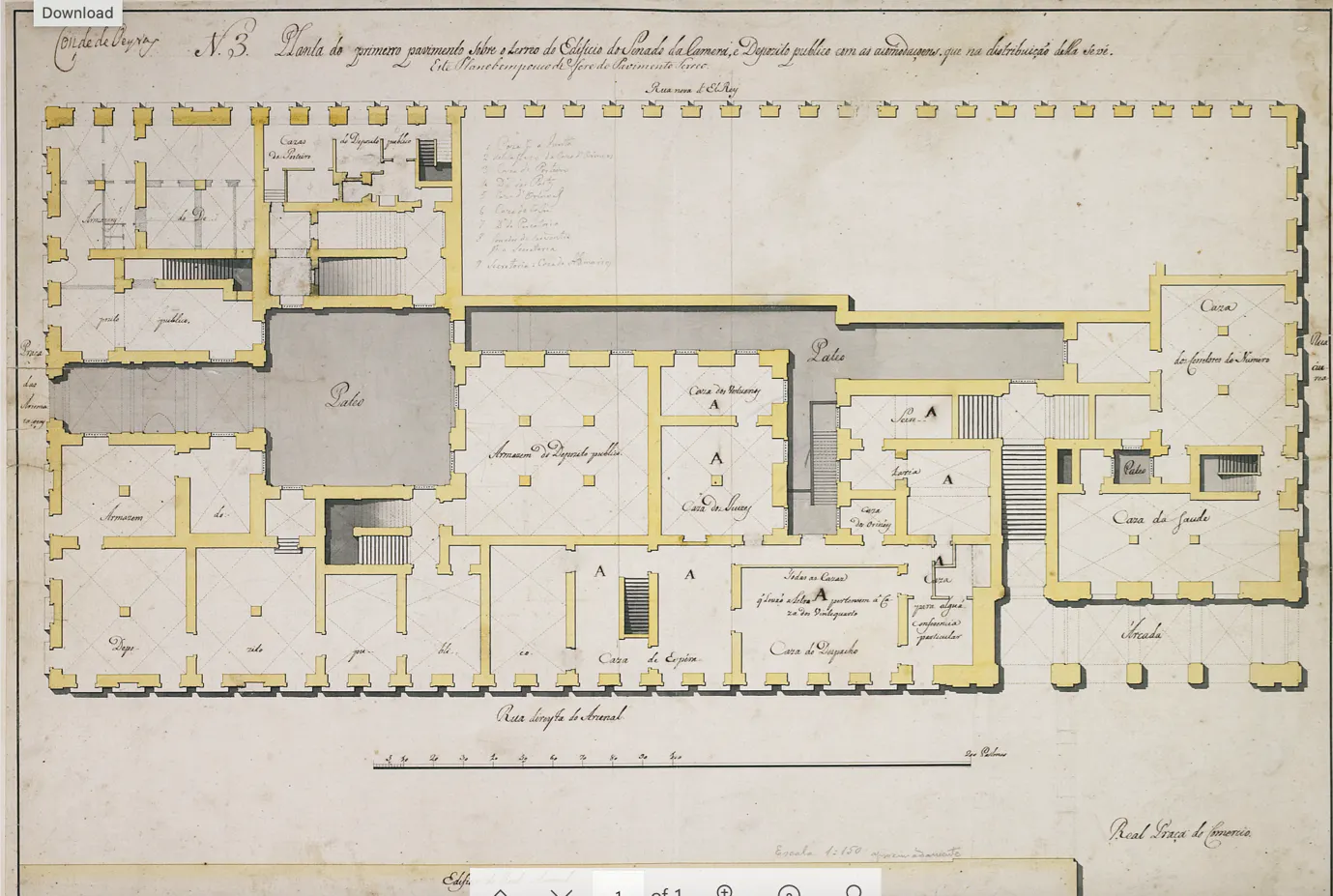
Eugénio dos Santos also designed the new municipality building, built on the grounds of the old patriarchal church, known today as Praça do Município (Municipality Square). Praça do Município and Praça do Comércio (Commerce Square) —the new name for the Royal Palace Square—were two of the most symbolic changes in newer Lisbon and both designed by his hands.
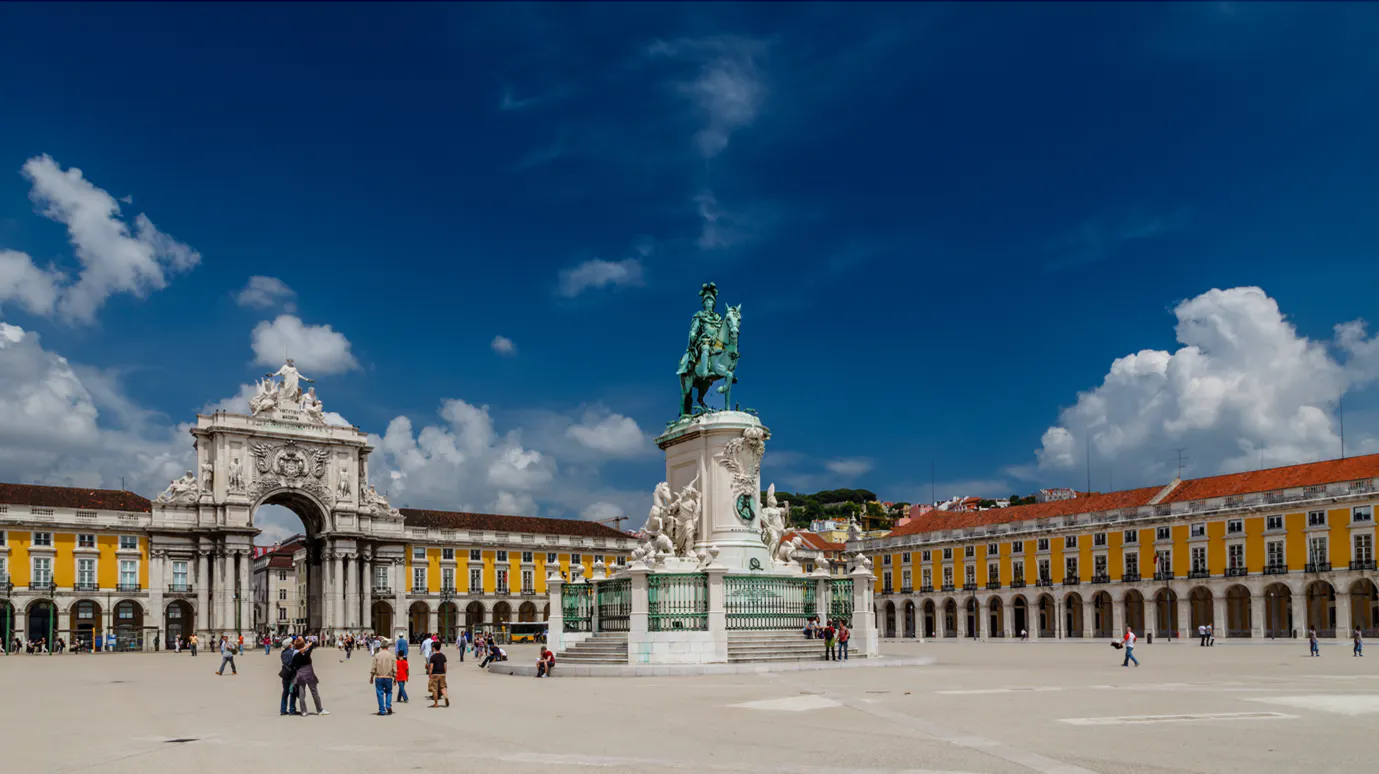
"The Terreiro do Paço was the object of Manuel da Maia's care right in the first part of his "Dissertation", when he foresaw the "good entrance" that could be made to the renovated city in that square;" ("A Reconstrução de Lisboa e a Arquitetura Pombalina", José- Augusto França).
In this image we can see in the foreground the equestrian statue of King Joseph, inaugurated in 1775, behind it, the north and east elevations of the square, with its typical arcade, remnants of the old "Gallery of the Ladies". The triumphal arch, in the middle of the north face, and the equestrian statue in the centre, both originally designed by Eugénio dos Santos in 1759, gave the square the necessary dignity and pomp, which had been somewhat compromised with the departure of the king. In this square would be built the stock exchange, which previously met in Rua Nova dos Ferros, hence the new toponym of the place: Praça do Comércio.
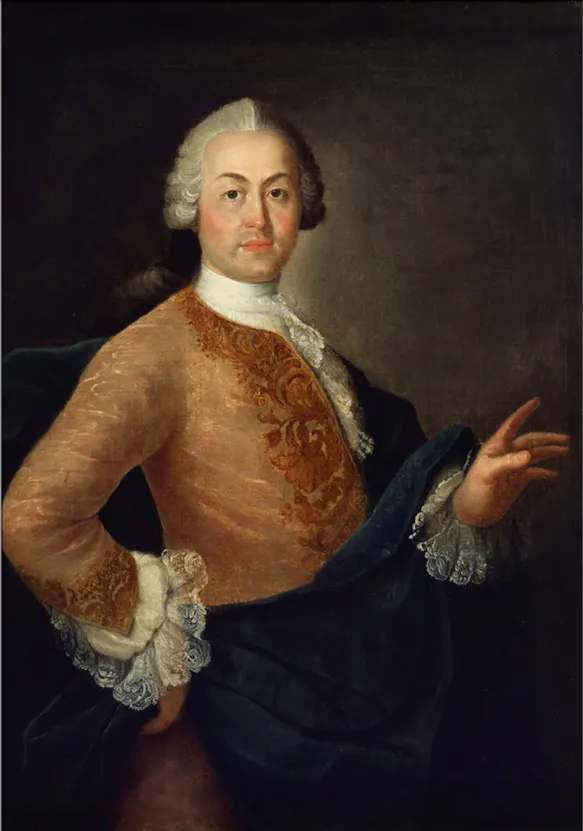
Carlos Mardel (c. 1695-1763) was of Hungarian origin and had lived in Austria before coming to Lisbon. In the Lisbon Plan, he was responsible for designing higher profiled zones, like Rossio, exploring the monumental and symbolic aspect of architecture. He also designed a part of the Aqueduto das Águas Livres and many other landmarks in Lisbon, like the Chafariz da Esperança, a public fountain. After the death of Eugénio dos Santos in 1760, he assumed the leadership of the Public Works Drafting Office.
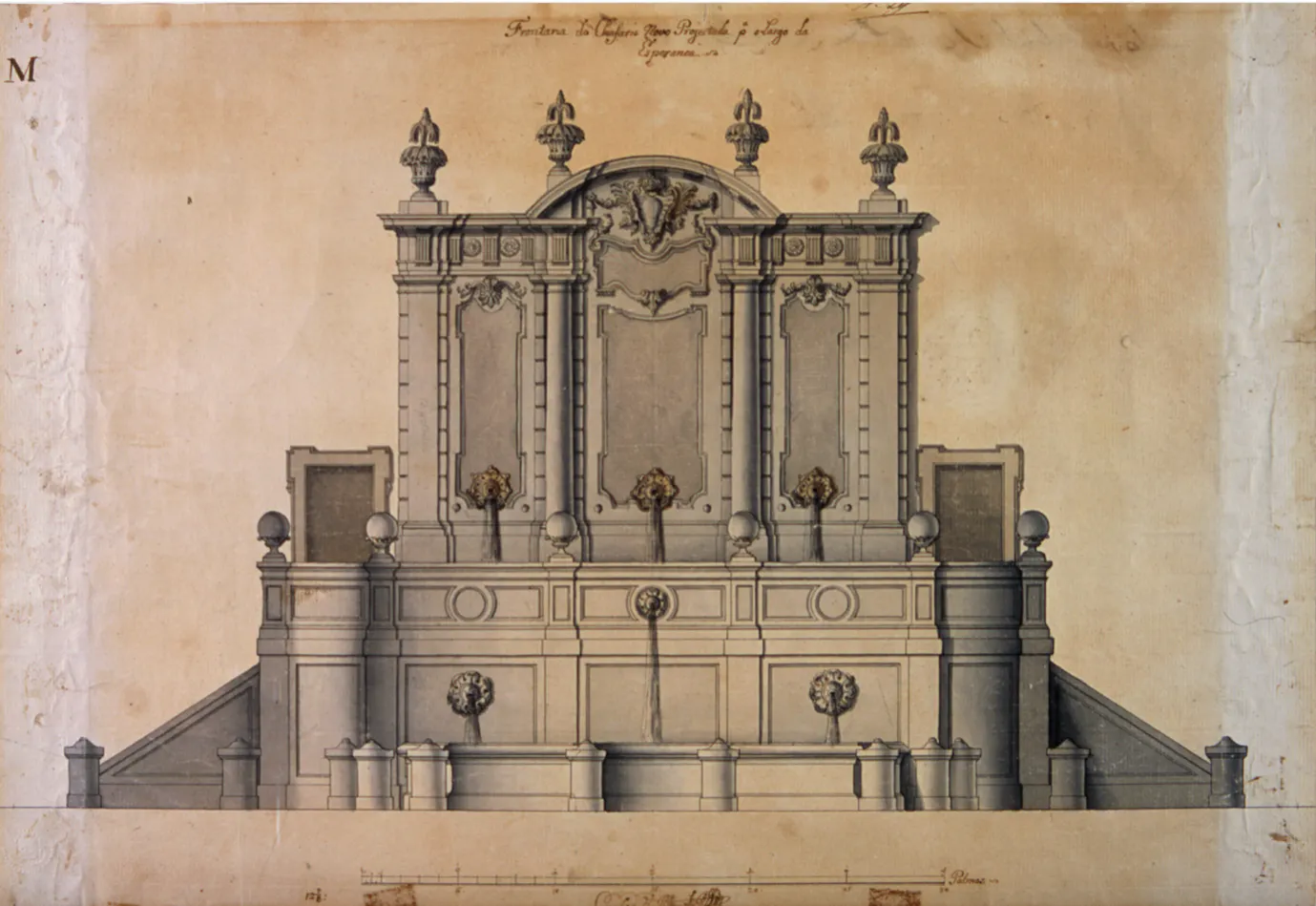
As part of the Águas Livres System project, namely the distribution of water throughout the city, Carlos Mardel designed some of Lisbon's most emblematic fountains, such as Chafariz do Rato (1753-1754) and Chafariz da Esperança (1752-1763), a drawing of which is shown here. This fountain, located in Largo da Esperança, is classified as a National Monument, and follows a vertical layout: on a lower level there is a wide tank, intended as an animal drinking trough, which receives water from stonework head carvings. On an upper level, there is a balcony with a second tank, where water falls from bronze head carvings, intended for people. This balcony can be reached by two flights of stairs on the side. The fountain is topped by a small curved open pediment bearing the royal coat of arms - thus signalling the royal patronage of its construction. At the centre and corners, three vase-shaped pinnacles with leafy decorations ending in an artichoke stand at the end of the volume.
Places to visit
- Explore
Carlos Mardel arrived in Portugal in 1733, where he was sergeant-major of engineering of the Infantry. From 1735 to 1745 he held a leading position in the Águas Livres System, having worked on the Águas Livres Aqueduct (1735-1744), and was responsible for the Arco Monumental das Amoreiras (1740-1744) - built to celebrate the arrival of the waters, the Arco do Carvalhão (1742-1745) and Mãe d'Água das Amoreiras (1745-1763), of which we see here a China ink and watercolour drawing.
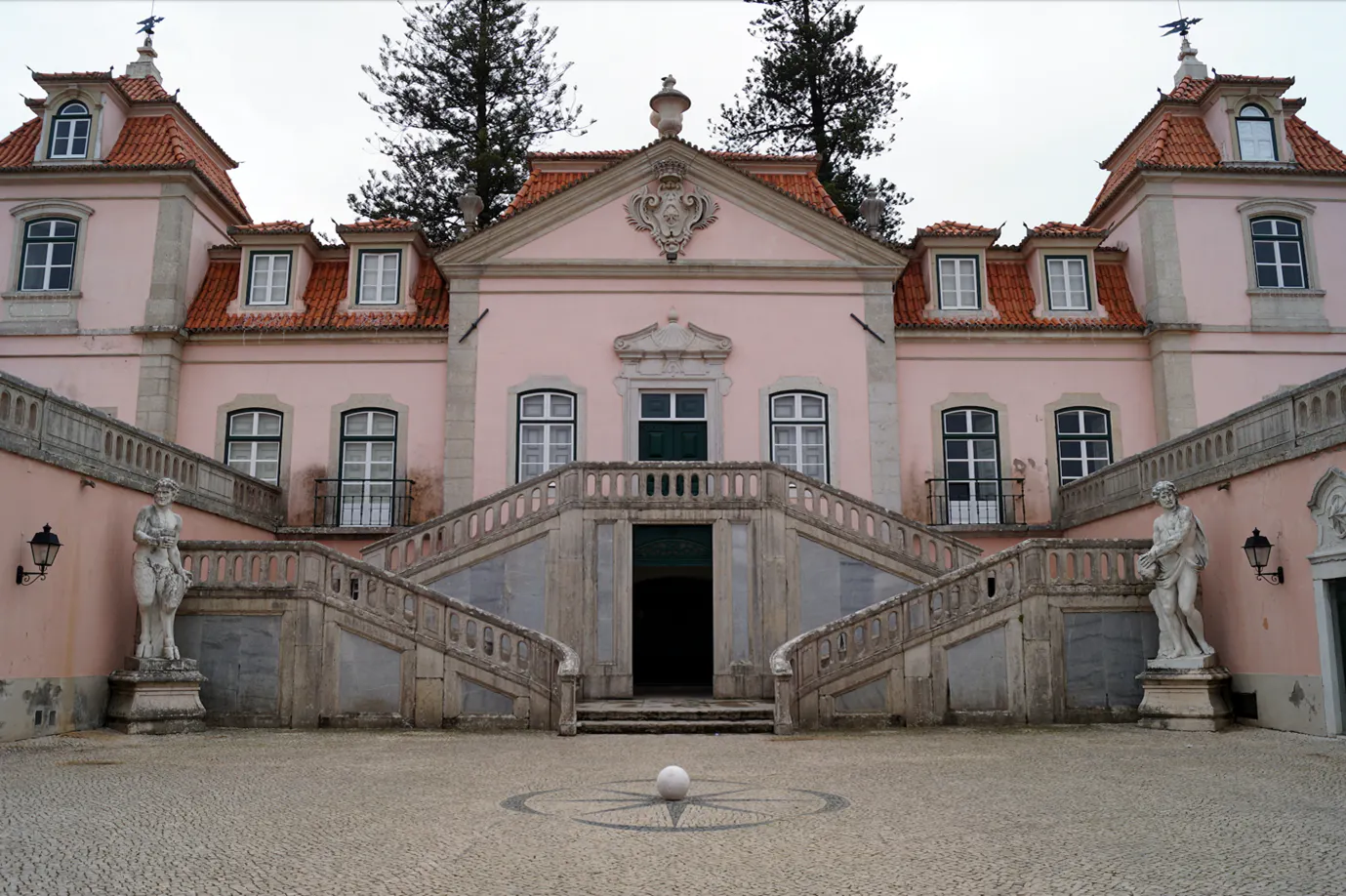
Renowned for his exquisite taste and technical excellence, Carlos Mardel was asked by Carvalho e Melo to draw up the plans for his new palace. The Palace of the Marquês de Pombal, built in Oeiras between 1759 and 1763 is known as Mardel’s most remarkable and complex work. It’s open to the public and only twenty minutes from Lisbon.
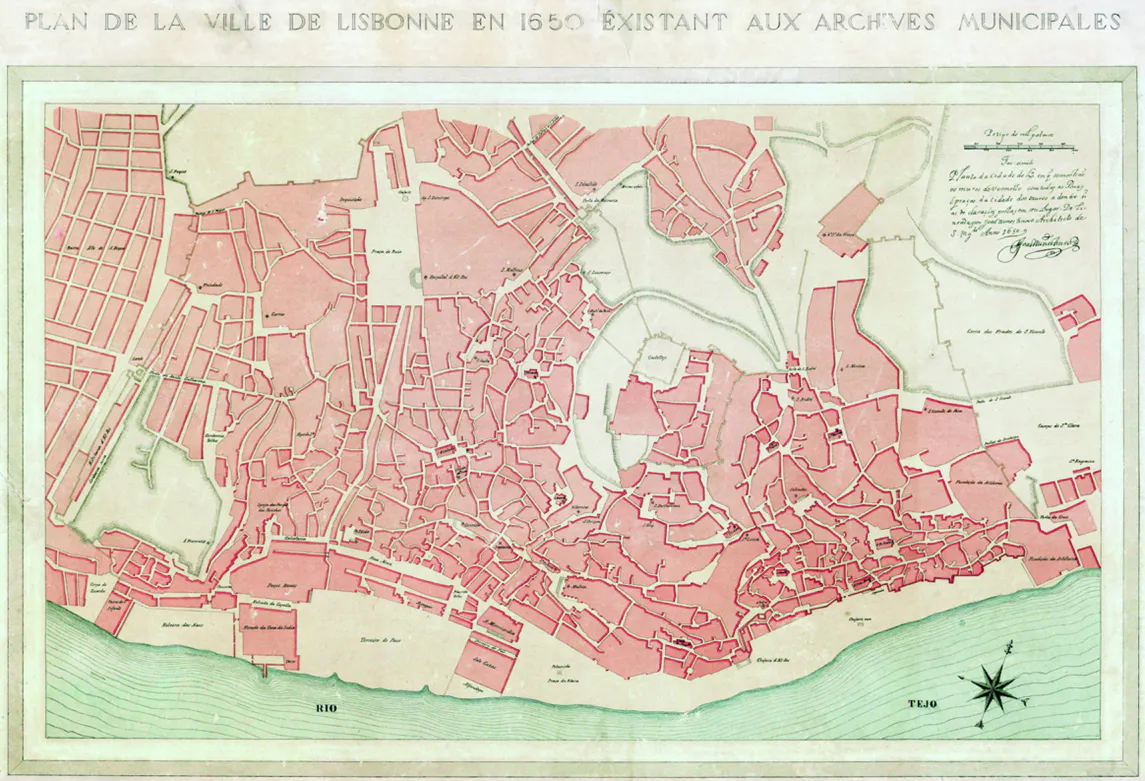
The General Plan of Lisbon, made in 1650, is the oldest known plan of the city today. This engraving is a copy made in 1850 by order of General Eusébio Pinheiro Furtado, who offered it to the Lisbon City Council. The original document was lost in the 19th century.
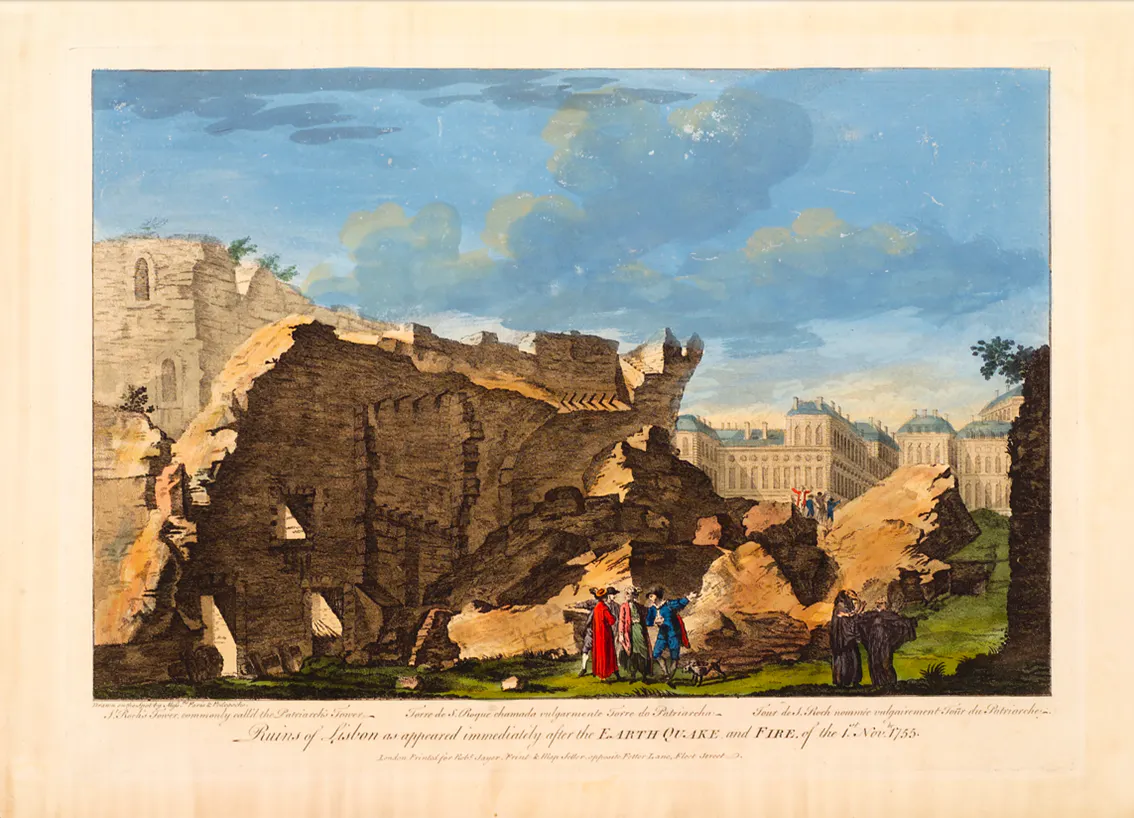
Next to the church of São Roque was the tower of the same name - also known as the Torre do Patriarca. Seriously damaged by the earthquake of 1755, it was demolished in 1837.
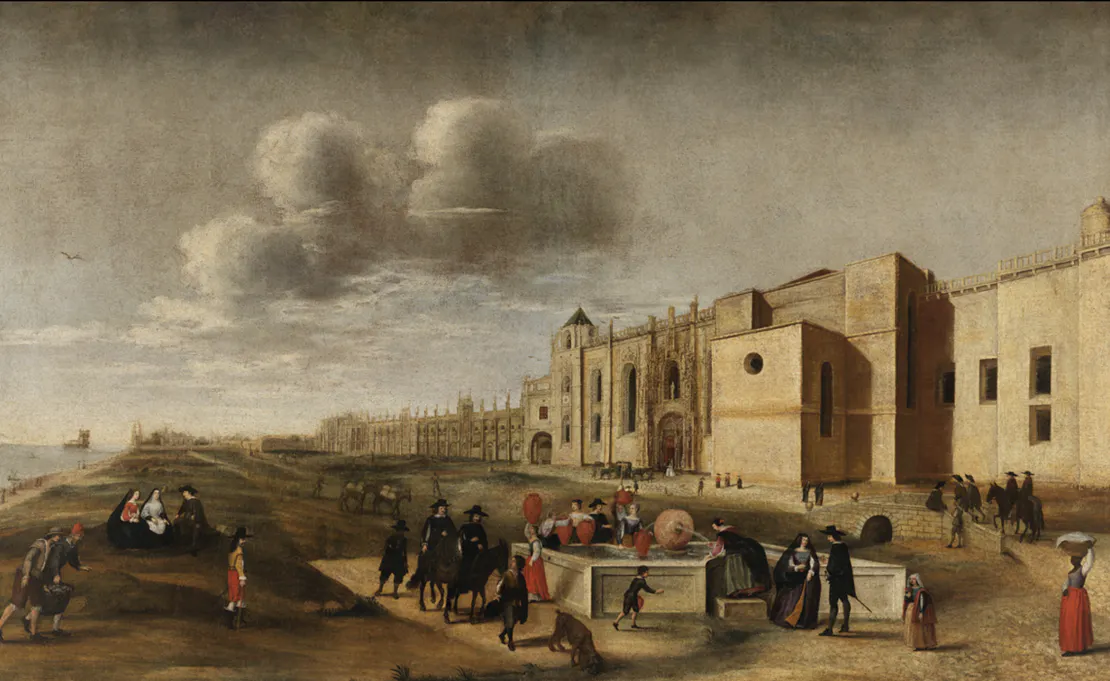
Painting with a rare theme in 17th century Portuguese painting: urban views without a religious character. Probably influenced by the work of Dirk Stoop, a Dutch painter who was in Portugal in the 1650s, Filipe Lobo was quite young when he painted this picture. In this painting we see a high-viewpoint perspective of the Jerónimos Monastery, with the painter placed virtually to the west, next to the beach, with the large monastic structure depicted as a backdrop. The famous Chafariz da Bola - a public fountain which was removed in the mid-nineteenth century – is depicted in the middle. We can also see the public road that ran parallel to the monastery, with a sketchy Torre de Belém (Tower of Belém) also visible in the background, together with the Quinta da Praia palace (which belonged to the Marquis of Marialva) and the convent of Bom Sucesso. In addition to the scenic quality of the place, the painter also captured, in this suburban area of the city, scenes of urban conviviality – people engaged in romantic chit chat, children, women fetching water, men on horses – as well as more rustic scenes with wandering beasts of burden and popular characters, in a contrasting allusion to their arduous daily tasks. Belém was at the time of the earthquake probably a bit more populated than when this painting was made, but not much, as it was still referred to as a quiet place, the favorite area of queen Mariana and her daughters in Lisbon.
Three fundamental ideas governed the various reconstruction proposals: 1) rebuild Lisbon as it was before, introducing only minor improvements; 2) level the entire lower part of the city and use the rubble to flatten it; 3) move the city to Belém. The king chose to rebuild Lisbon on the same site, using the rubble to level the ground and applying innovative design and construction techniques to meet the demands of a modern capital. If only minor improvements were made, the buildings would remain equally vulnerable to damage from tsunamis or earthquakes. Moving Lisbon to Belém would mean abandoning the memory of the city, where the court had lived for several centuries, and forcing hundreds of owners to rebuild their houses elsewhere. It is possible that the first suggestion, rebuild Lisbon as it was before, repeating the same structural problems, was only meant to direct the king's attention to the two solutions that really interested Manuel da Maia, in terms of urban challenge: radically reconstructing the geography of the city, a herculean proposal in the efforts of levelling and removing rubble, but enticing in the possibilities of transforming the old city; or totally recreating the city, perhaps the most attractive proposal for the urbanist who dreams, the Belém hypothesis, the tabula rasa, the free drawing on white paper.
![Plan [6] Plan for lower Lisbon, 1755, drawn by Eugénio dos Santos e Carvalho (1711-1760) - MC.DES.0979 © Colecção do Museu de Lisboa / Câmara Municipal de Lisboa – EGEAC](https://images.prismic.io/quake/acQfD5GXnQHGY91K_ManueldaMaia16.png?auto=format,compress)
"Plan for the destroyed lower city of Lisbon, in which all the old streets, lanes and alleys are marked with black punctuation and the streets drawn with complete freedom are shown in white and the places of the new buildings in yellow, and the churches preserved in their locations marked in crimson and the Terreiro do Paço raised to a great height and a new jetty inside the Customs House with better use than the one to the west".
![Plan [5] for the renovation of the city of Lisbon after the 1755 earthquake, drawing by Elias Sebastião Poppe and Eugénio dos Santos e Cravalho (1711-1760) - MC.DES.0980 © Colecção do Museu de Lisboa /Câmara Municipal de Lisboa – EGEAC](https://images.prismic.io/quake/acUMzZGXnQHGY_Fp_ManueldaMaia17.png?auto=format,compress)
"Plan for the renovation of the destroyed city of Lisbon, idealised with complete freedom, both within the town and in the marine area, without regard for the preservation of any old element, may it be sacred or profane".
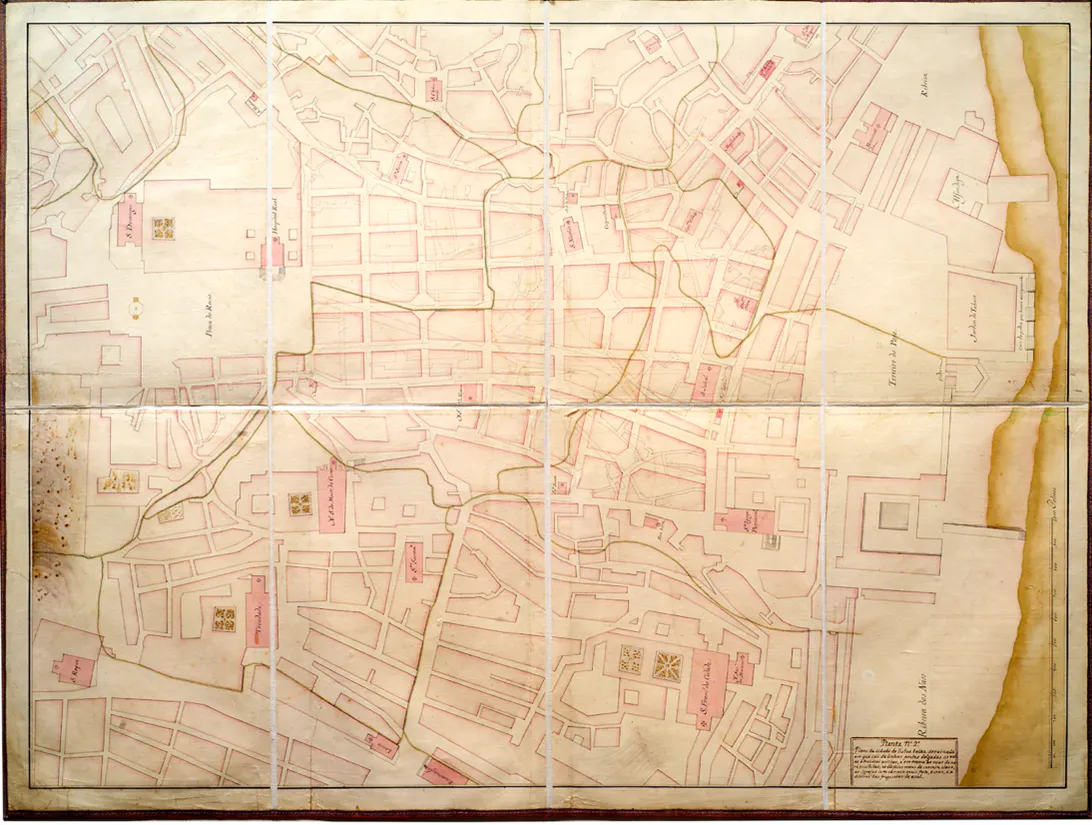
"Plan of the ruined lower city of Lisbon in which the old streets and alleyways are shown in thin black lines, and the newly chosen streets in white, the new buildings in light carmine, the churches in stronger carmine and cross, and the division of the parishes in blue."
These three plans, among the several presented to the king in different phases of the design of the new Baixa, show how the fundamental principles of the reconstruction were taking shape, in a process of design and experimentation, with advances and retreats. Before the earthquake, the Baixa of Lisbon had more than 40 streets and 70 alleys - how would it be possible to reorganise this intricate network of streets? Gradually the various plans led to the final form, first bringing together streets, churches, buildings, then eliminating them altogether: the final plan radically cuts the organicity of the space, eliminating any curved or even oblique line, but retains the two squares, Rossio and Terreiro do Paço (named Praça do Comércio), as spatial references of old Lisbon. During the design process, questions were raised: would it be better to close the city to the river, thus preventing a future tsunami from destroying the city? How to improve communications? Sun exposure? Air circulation? And urban hygiene? The final plan would reveal it, between the two squares the great transformation took place: from the myriad of squares, streets and alleys, new streets were born, wide, straight, crossed by other perpendicular ones, in a perfect orthogonal grid, slightly rotated in relation to the river, to make the most of the sun's exposure, and on a subtle slope, to better drain the waters. The direction of the prevailing winds is also taken into account, to improve air quality. This city will give Lisboans better access, better health and more security.
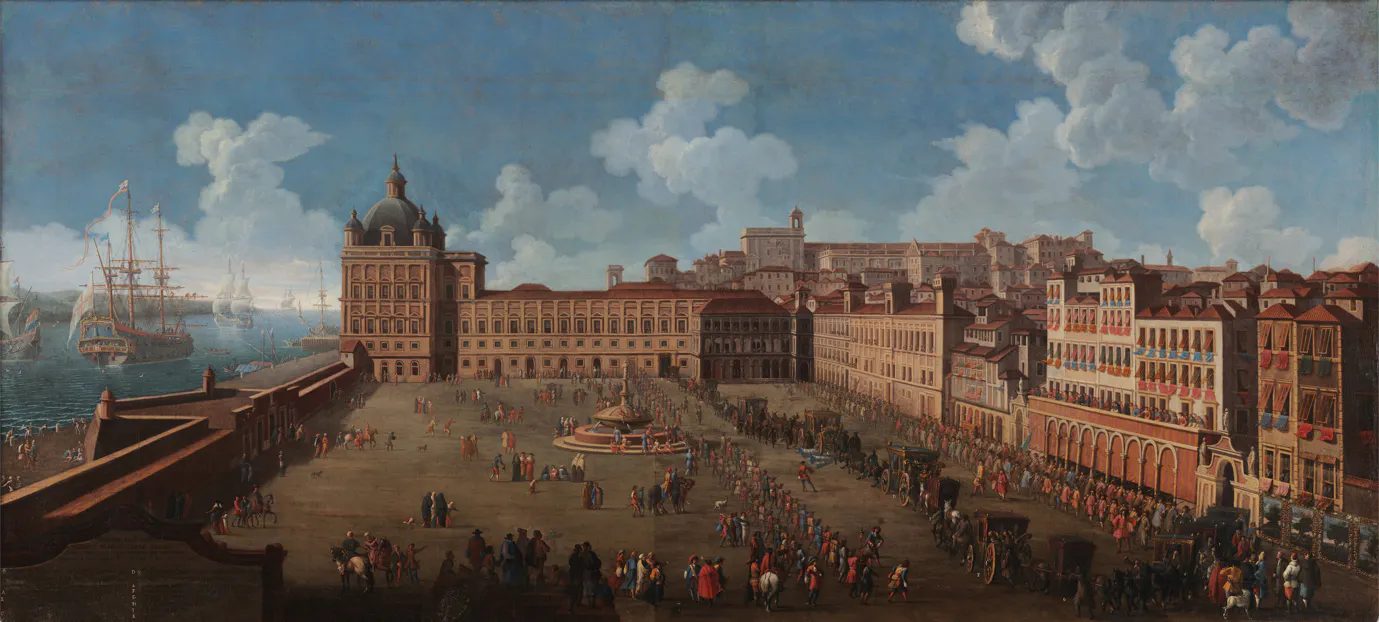
In this commemorative painting, in addition to the subject represented - the official reception of a diplomatic representative of the Holy See by the King of Portugal, Pedro II - we can also observe the careful architectural surroundings and imagine the palatial grandeur of pre-Earthquake Lisbon.
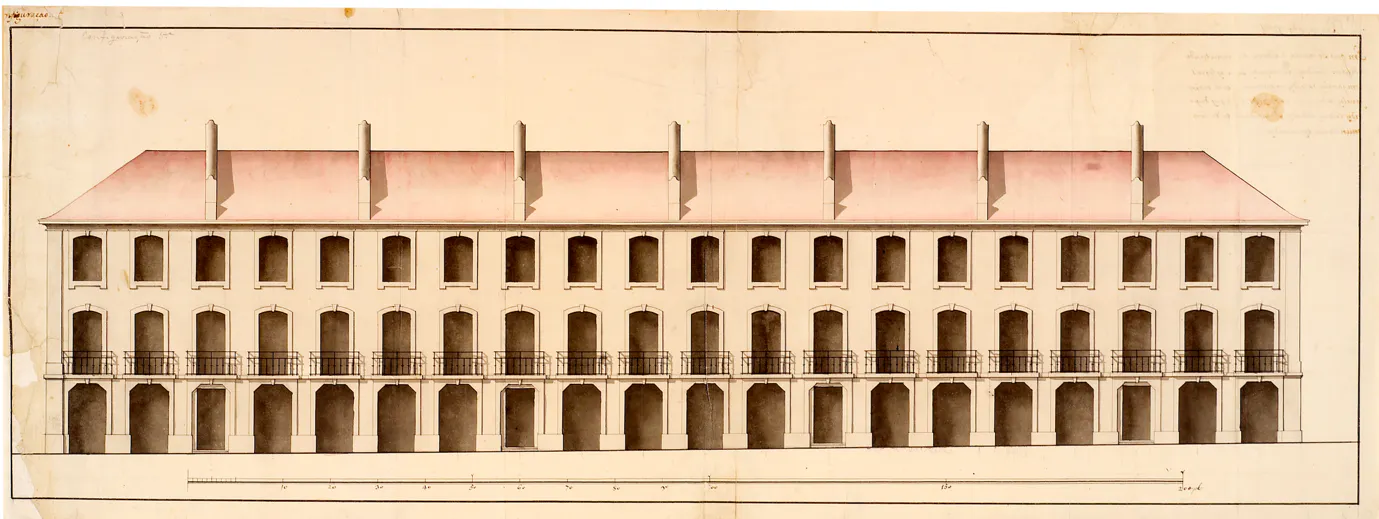
Although it was on paper that ideas took shape, they were influenced by practice, the evolution of technological ideas and changes on the ground. One example of this evolution was the rule of buildings with a maximum of two floors above the ground floor: Manuel da Maia noted that the taller the buildings, the greater the destruction, basically following the same intuition as Jean-Jacques Rosseau. Therefore, Eugénio dos Santos proposed that buildings should not be taller than the width of the streets, to prevent widespread damage in the future. But that rule would later be circumvented, and the buildings were redesigned with three storeys, not least because the introduction of the “Gaiola Pombalina” (Pombaline cage) offered greater safety and stability, allowing more storeys to be added.
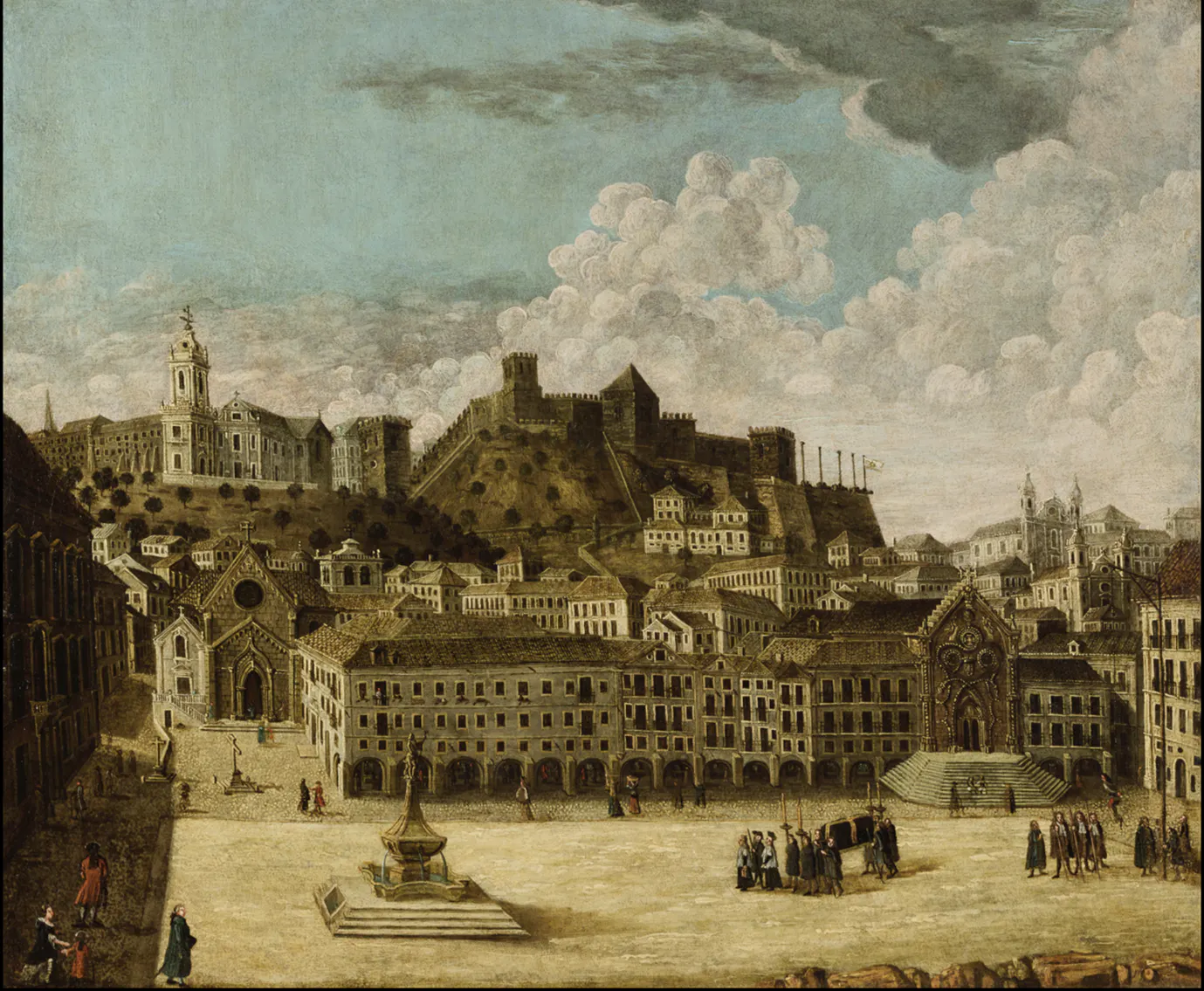
The pomp of the palaces and the old churches entailed high-rise construction, alterations, additions and ornamentation. All this was in contradiction with the criteria of security and political representation of the new architectural logic. For that reason, many of the old palaces and churches like the ones we can see in the painting depicting the Terreiro do Paço, disappeared from the Lisbon landscape after the earthquake. In the painting that represents the pre-quake Rossio, we can see the arches that flanked the Hospital de Todos os Santos, creating a covered gallery for passers-by. This type of arches can still be seen today in other Portuguese cities, like the Praça do Giraldo, in Évora. Évora suffered relatively little damage from the earthquake, and so it still retains many of the features that typified Lisbon at that time, in this case the arcades, but also the central fountain in the same square, built at the end of the 16th century. In his Dissertations, Manuel da Maia discussed whether or not to rebuild the arcades in Lisbon, as it was important to maintain this ancient space of merchants' meeting and people circulation, adapting its forms to the architectural criteria of the new city. If in Rossio the option was to abandon the arcades, in the Praça do Comércio the arcades reappeared with new dignity, repeating themselves, modular, to the east, west and north of the square, ensuring the monumentality of the whole.
Enlightenment ideals animated the reconstruction engineers and were reflected in their designs. With ease of movement, standardised plots, simple parcelling and a rationing of the space reserved for churches, Eugénio dos Santos' plan met the conceptual objectives established by Manuel da Maia, and served as the basis for the Pombaline downtown. For the construction, a new method, rational and efficient, would be put into practice, with modular elements, prefabricated components and standardized dimensions.
In the first 10 years after the earthquake, an average of 6 buildings per year would be constructed and then, between 1766 and 1777, an average of 35 per year - an impressive quantity for 18th century construction technology. The prestige of the Marquis of Pombal will be forever linked to the impact caused by the reconstruction of Lisbon: the magnitude and speed (especially for the time) of the transformation of the city. When the Marquis of Pombal is finally removed from power in 1777, it is said that half or at least a third of Lisbon is rebuilt. The consistency and correctness of urban construction models can be measured by their longevity. What is not done is planned, and will continue to be built according to the Plan until the 21st century. The last plot left vacant by the earthquake and included in the 1758 Lisbon Plan - between the streets of Alecrim and António Maria Cardoso - will be concluded in 2004, according to a project by architect Siza Vieira.
Continue Exploring
Model of Lisbon before the earthquake:
Lisboa Pré-Terramoto (Cidade 3D):
City Museum (Terreiro do Paço 3D):
Walter Rossa and Raquel Henriques da Silva on the (re)invention of Lisbon after the 1755 earthquake:
The "anti-seismic" Pombaline Cage structure:
Fountain at Largo do Rato:
Chafariz da Esperanca:
"Dissertation by Manuel da Maia offered in 1756 to the Duke of Lafões, in his capacity as Regent of Justice" transcribed in Cristóvão AIRES, Manuel da Maia and the Portuguese military engineers in the 1755 earthquake, Imp. Nacional, 1910, pp. 23-50:
The 1755 Earthquake, Torre do Tombo and Manuel da Maia:
"Memorial do Convento", José Saramago, 1982 - Editorial Caminho (a work of historical fiction that centers on the construction of the Mafra Convent):
Felipe Lobo, painter:
Bibliography
A cidade pombalina, história, urbanismo e arquitectura: os 250 anos do plano da Baixa, Actas das Jornadas, Teresa Leonor M. VALE (coordenação), Câmara Municipal, 2009.
Cristóvão AIRES, Manuel da Maia e os engenheiros militares portugueses no terremoto de 1755, Imprensa Nacional, 1910. https://purl.pt/848
Hélder CARITA, «Dois alçados inéditos do Palácio Real de Campo de Ourique», Revista de História da Arte, nº 11, 2014, pp. 185-207: https://run.unl.pt/handle/10362/16911
Adélia Maria Caldas CARREIRA, Lisboa de 1731 a 1833: da desordem à ordem no espaço urbano, Tese de doutoramento, Departamento de Históira de Arte, Universidade Nova de Lisboa, 2012.
Teresa Campos COELHO, «Modelos, métodos e técnicas da reconstrução pombalina», Discursos, Língua, cultura e sociedade, nº 1, Abril, 1999, pp. 215-230: https://repositorioaberto.uab.pt/handle/10400.2/4271?locale=en
José-Augusto FRANÇA, A Reconstrução de Lisboa e a Arquitectura Pombalina, Biblioteca Breve, Instituto de Cultura e Língua Portuguesa, 1989.
José-Augusto FRANÇA, Lisboa pombalina e o Iluminismo, Bertrand, 1987.
Jorge MASCARENHAS, Sistemas de Construção V – O Edifício de Rendimento da Baixa Pombalina de Lisboa., Livros Horizonte, 2009.
Helena MURTEIRA, «Projetar no tempo: o Iluminismo e a cidade», Arte & Utopia, 2013, pp. 79-87.
Lúcia Lima RODRIGUES e Russell CRAIG, «Recovery amid Destruction: Manoel Da Maya and the Lisbon Earthquake of 1755», Libraries & the Cultural Record, volume 43, nº 4, 2008, pp. 397–410: http://www.jstor.org/stable/25549516.
Walter ROSSA, On the 1st Plan, Câmara Municipal de Lisboa, 2008.
Walter ROSSA, Além da Baixa: Indícios de planeamento urbano na Lisboa Setecentista, Ministério da Cultura/IPPAR, 1998.
Maria Helena Ribeiro dos SANTOS, A Reconstrução da Baixa de Lisboa no século XVIII, O Projecto de Manuel da Maia, Caleidoscópio, 2022.
Cristóvão Aires de Magalhães SEPULVEDA, Manuel da Maia e os engenheiros militares portugueses no terremoto de 1755, Imprensa Nacional, 1910.
Mafalda Gambutas Teixeira de SAMPAIO, Forma Urbana da parte baixa da Lisboa destruída, Análise e avaliação da cartografia (1756-1786), Tese de Doutoramento em Arquitetura e Urbanismo, ISCTE-IUL, 2011.
Gustavo Matos SEQUEIRA, «A cidade de D. João V», Lisboa: oito séculos de História, Vol. II, Câmara Municipal de Lisboa, 1947, pp. 468-487.
Raquel Henriques da SILVA, Lisboa Romântica, Urbanismo e a Arquitectura, 1777-1874, Tese de doutoramento, FCSH, Universidade Nova de Lisboa, 1997.
1755, O Grande Terramoto de Lisboa, FLAD/Público, 2005.
Show other RFID points
Room of Tales
Providências
Read more
Room of Tales
The German merchant
Read more
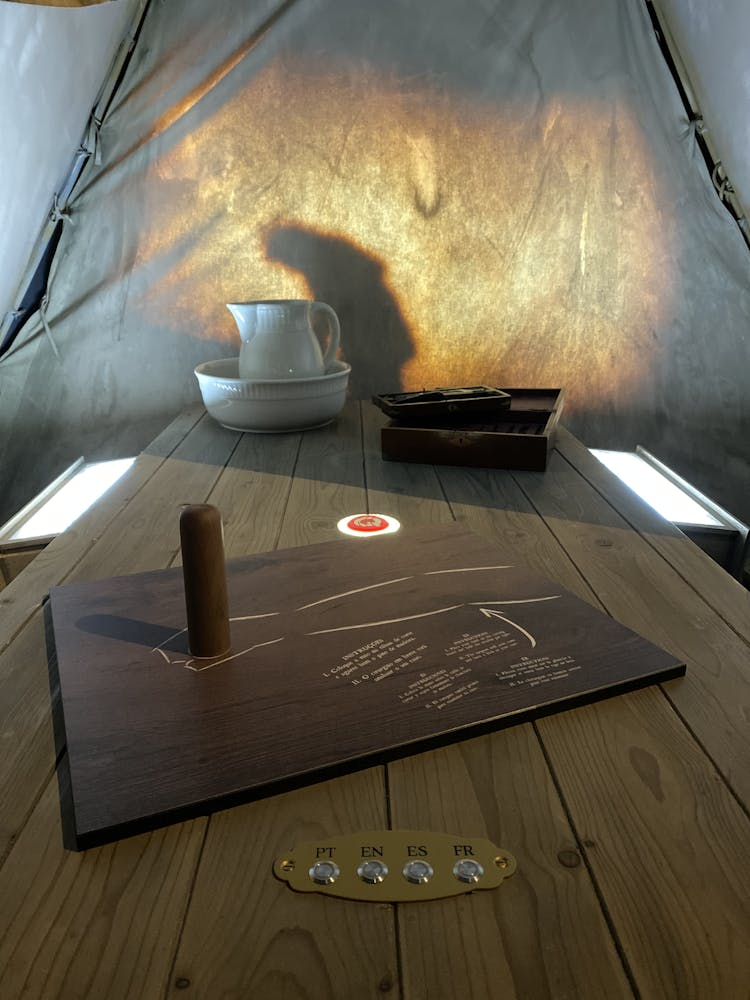
Room of Tales
Surgeon Bleeding Barber
Read more
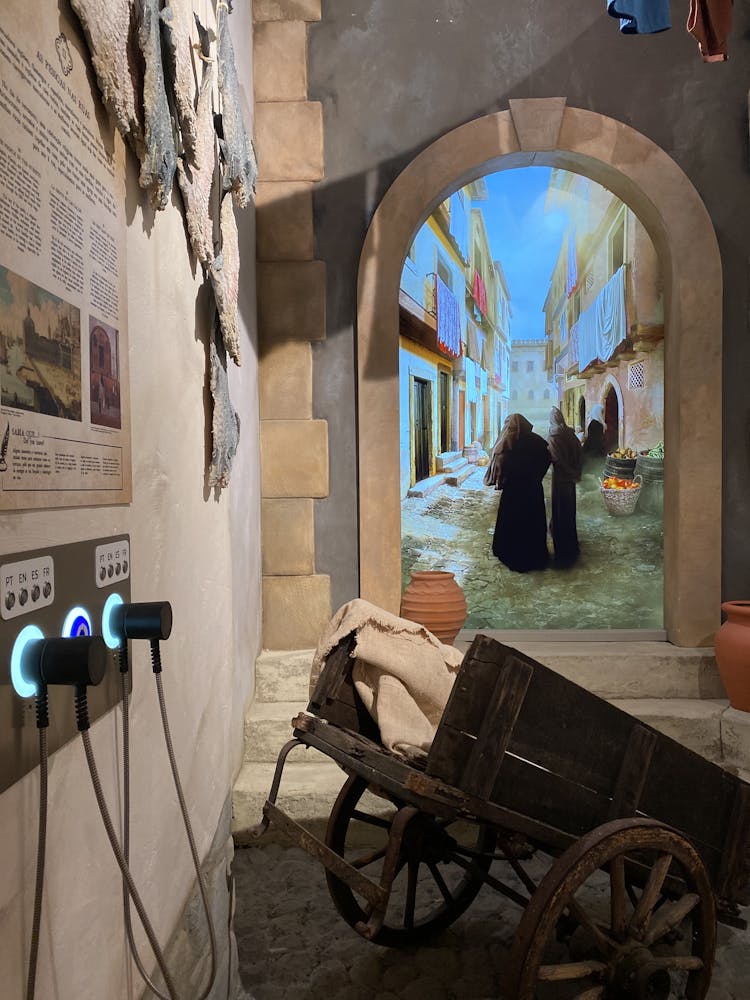
Streets of Lisbon
The people in the streets
Read more
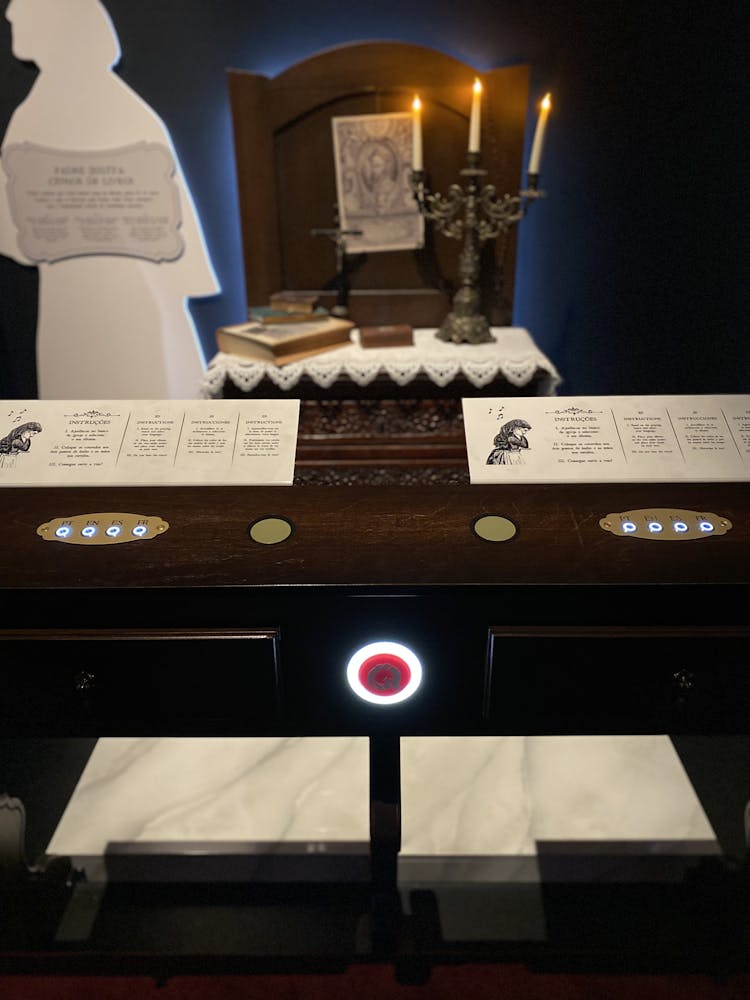
Room of Tales
Jesuit book censor Priest
Read more
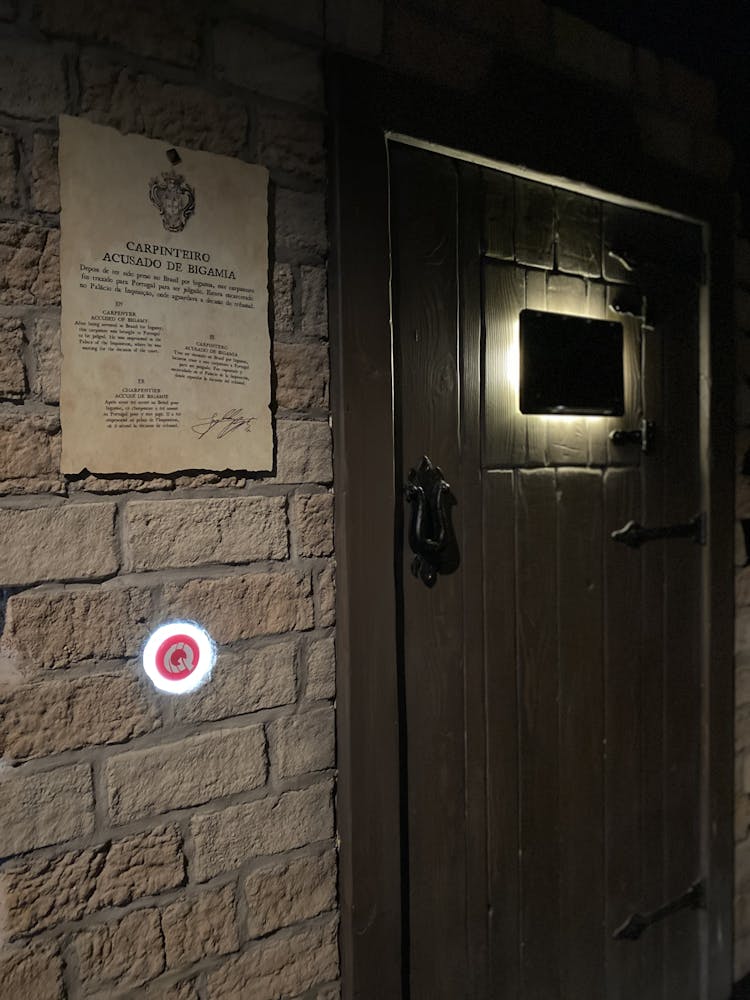
Room of Tales
Carpenter accused of bigamy
Read more
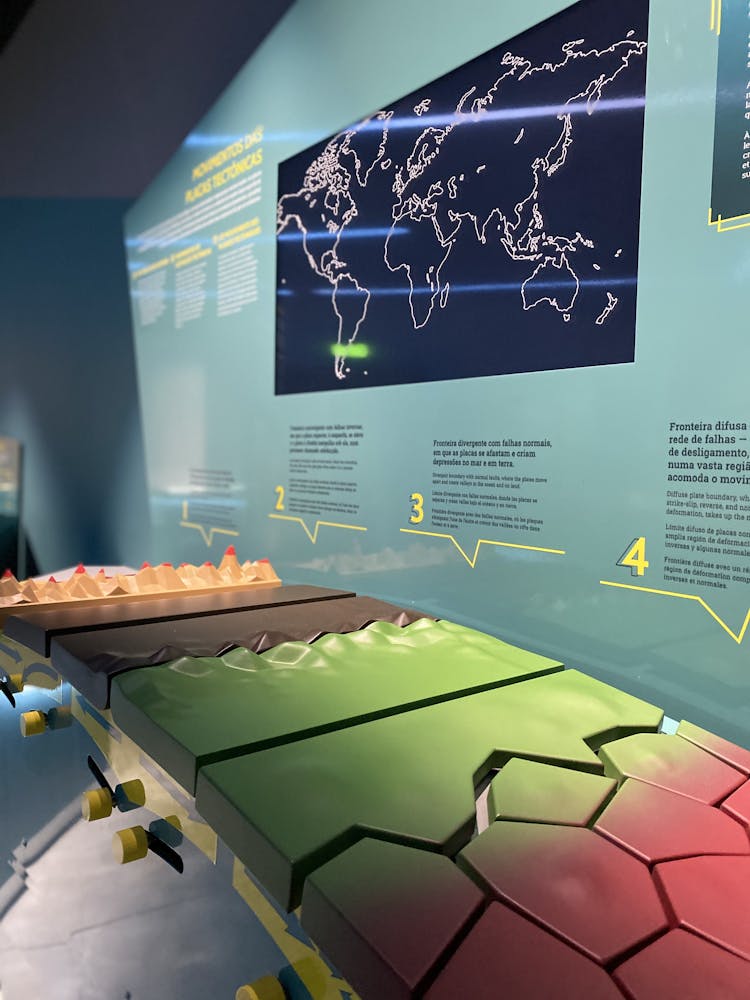
Training Centre
Tectonic Plates and Moving Plates
Read more
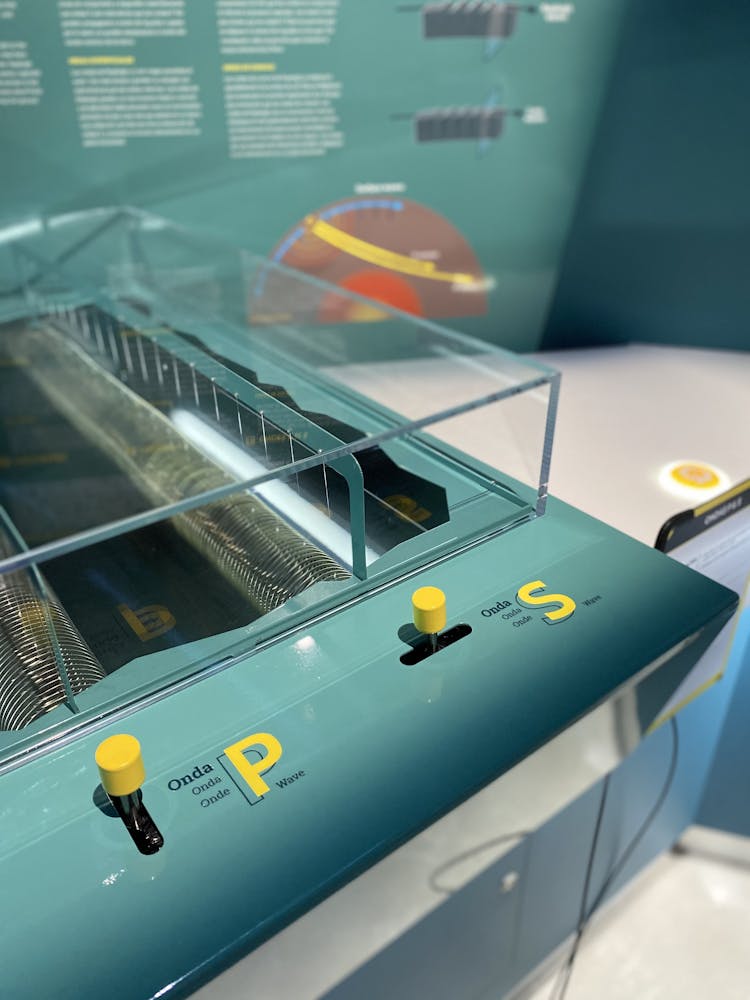
Training Centre
P&S Waves
Read more
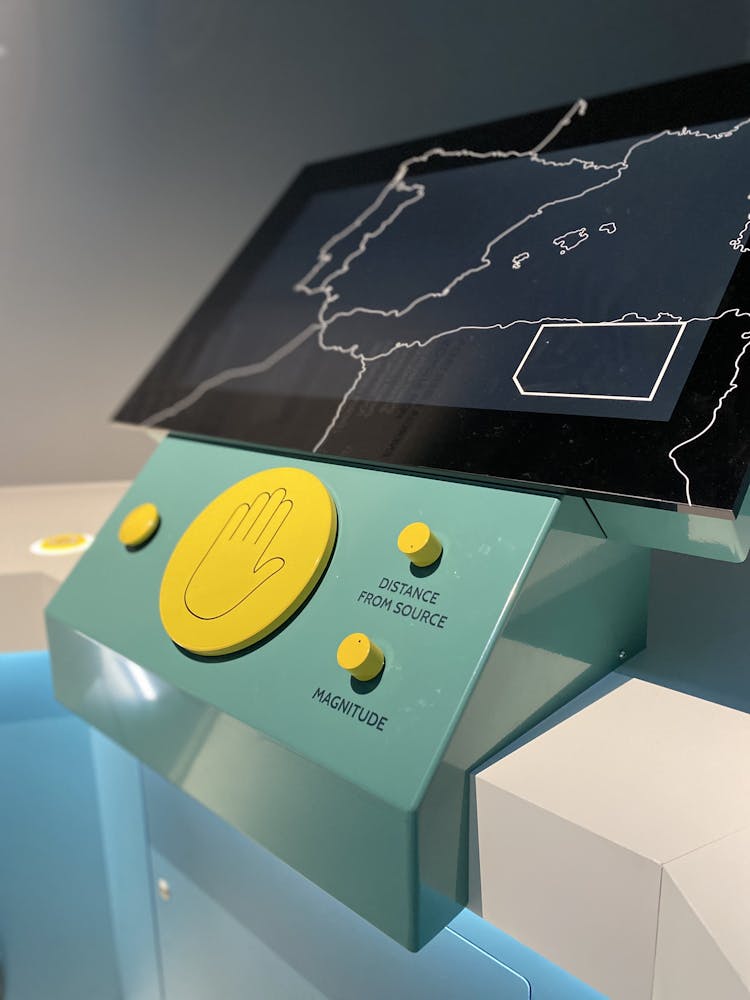
Training Centre
The Size of an Earthquake
Read more
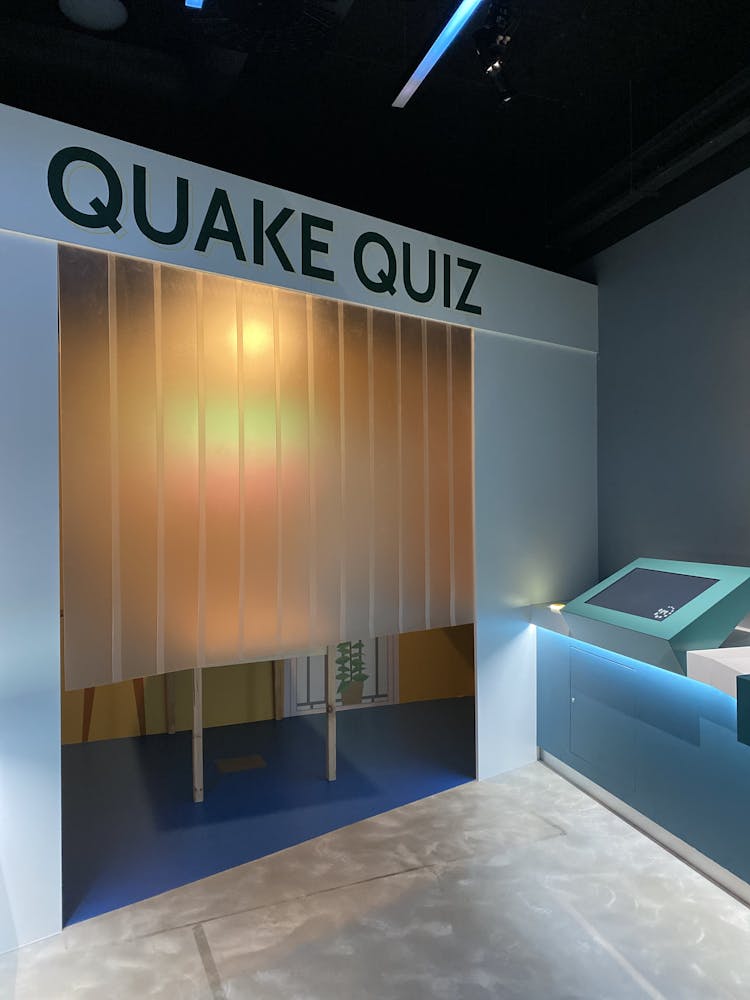
Training Centre
Are we prepared for the next one?
Read more
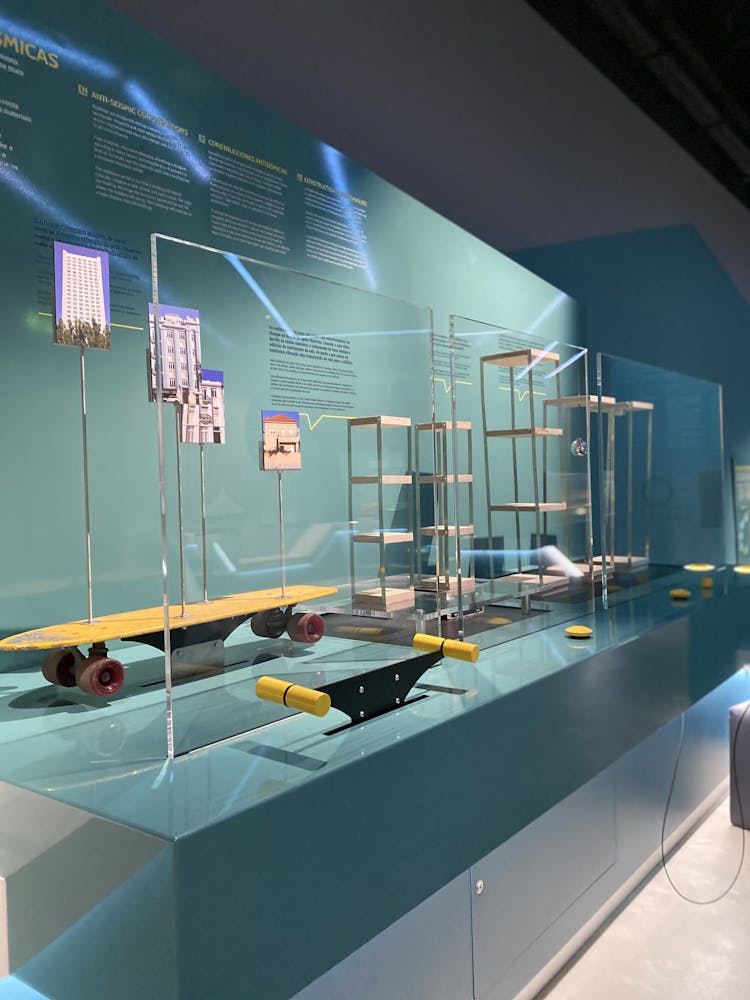
Training Centre
Anti Seismic Constructions
Read more
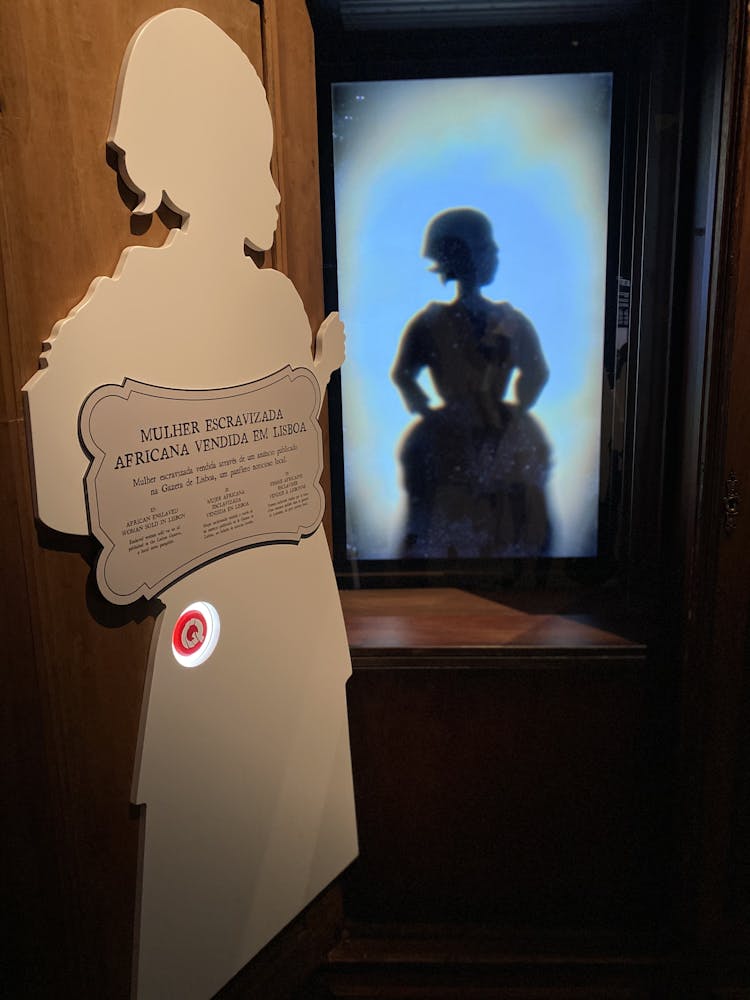
Room of Tales
African enslaved woman bought in Lisbon
Read more
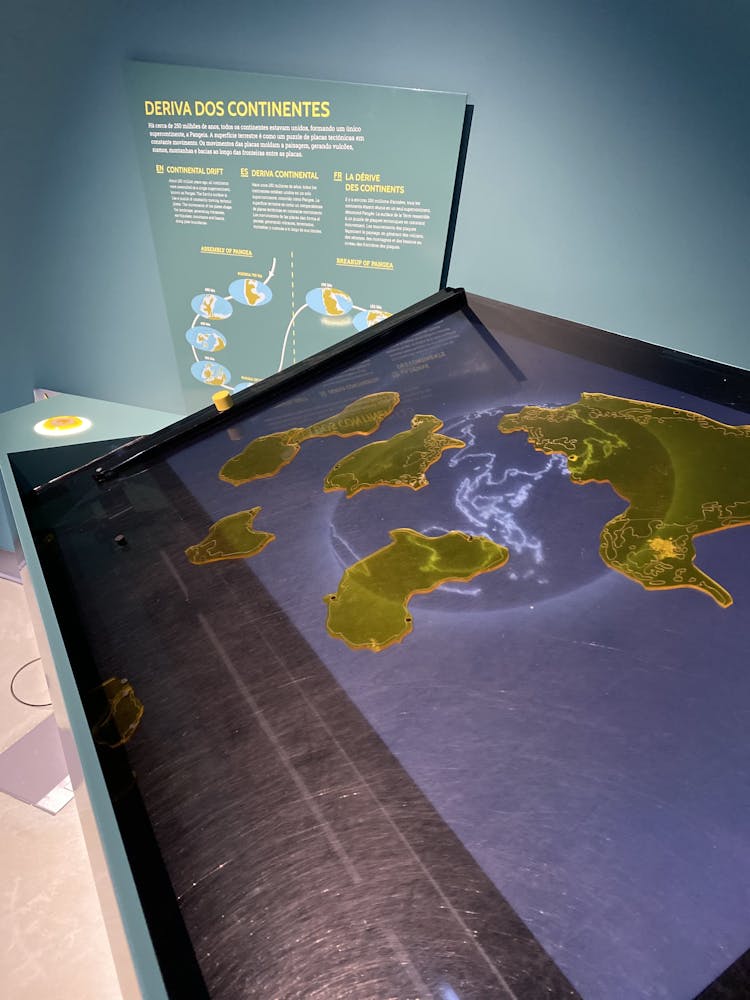
Training Centre
Continental Drift
Read more
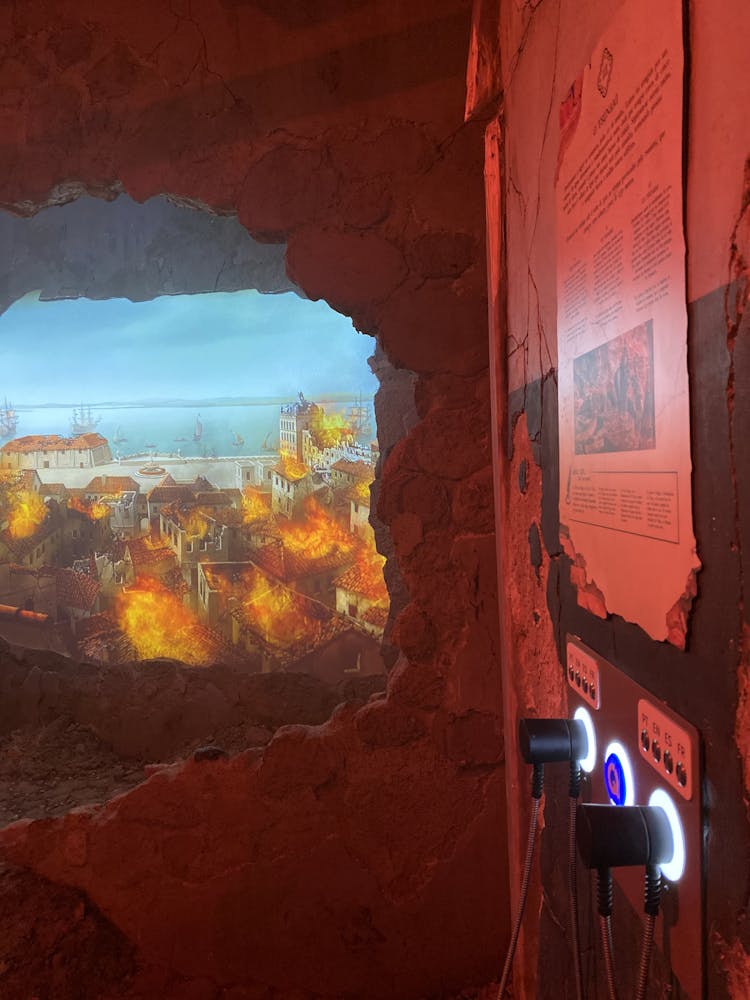
Tsunami and Fire
The Tsunami
Read more
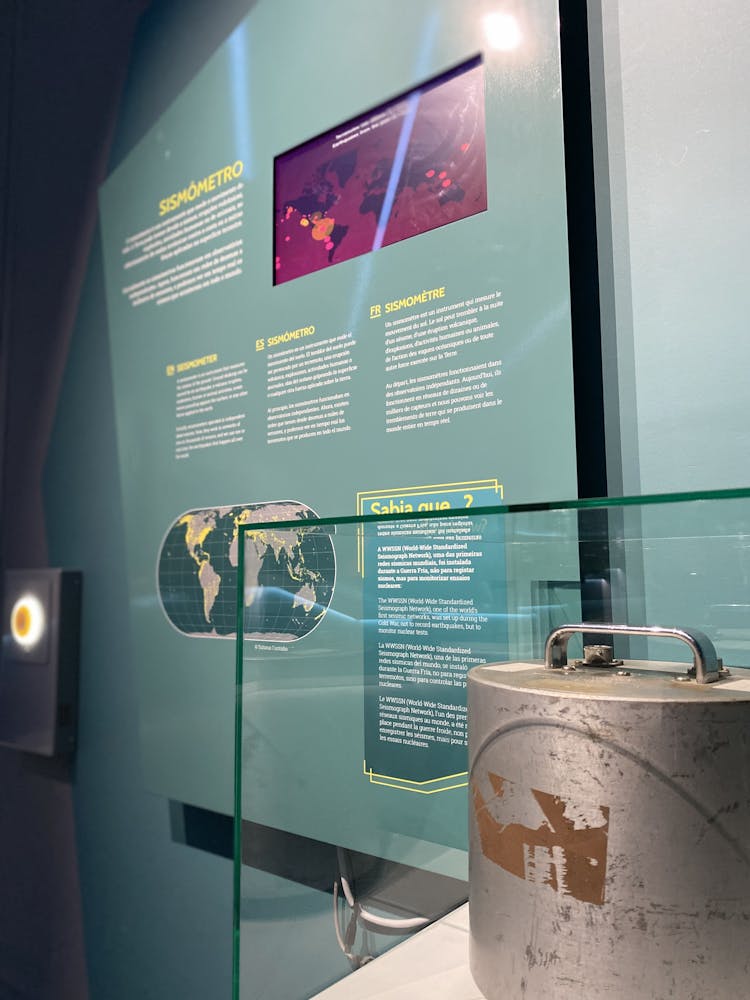
Training Centre
Seismometer
Read more
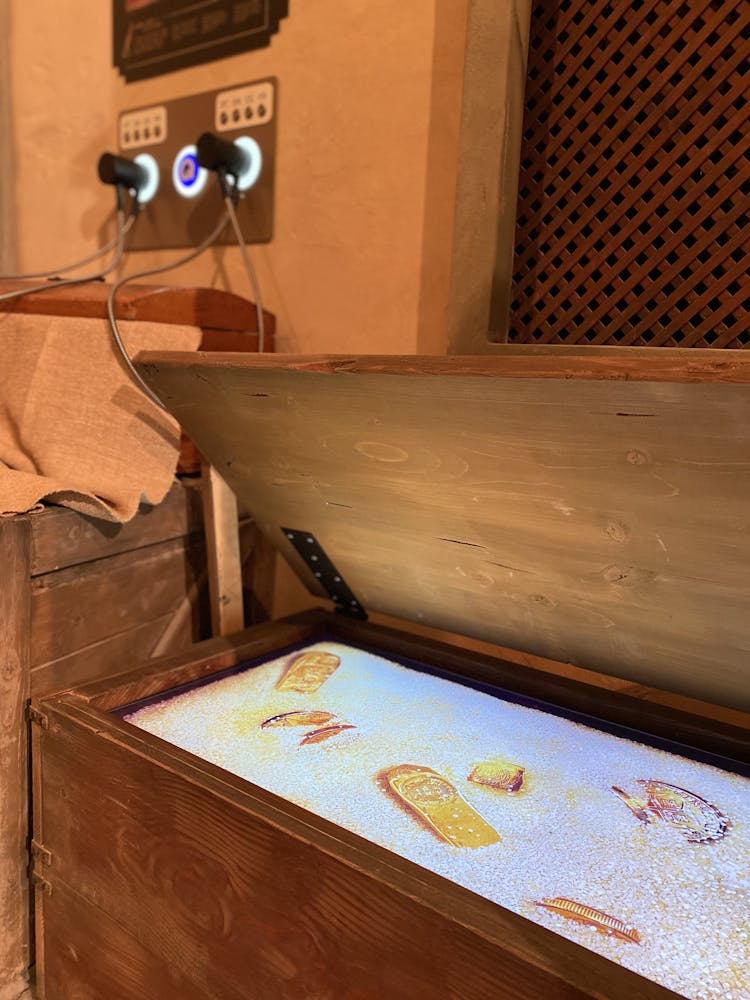
Streets of Lisbon
Richness of the city and gold smuggling
Read more
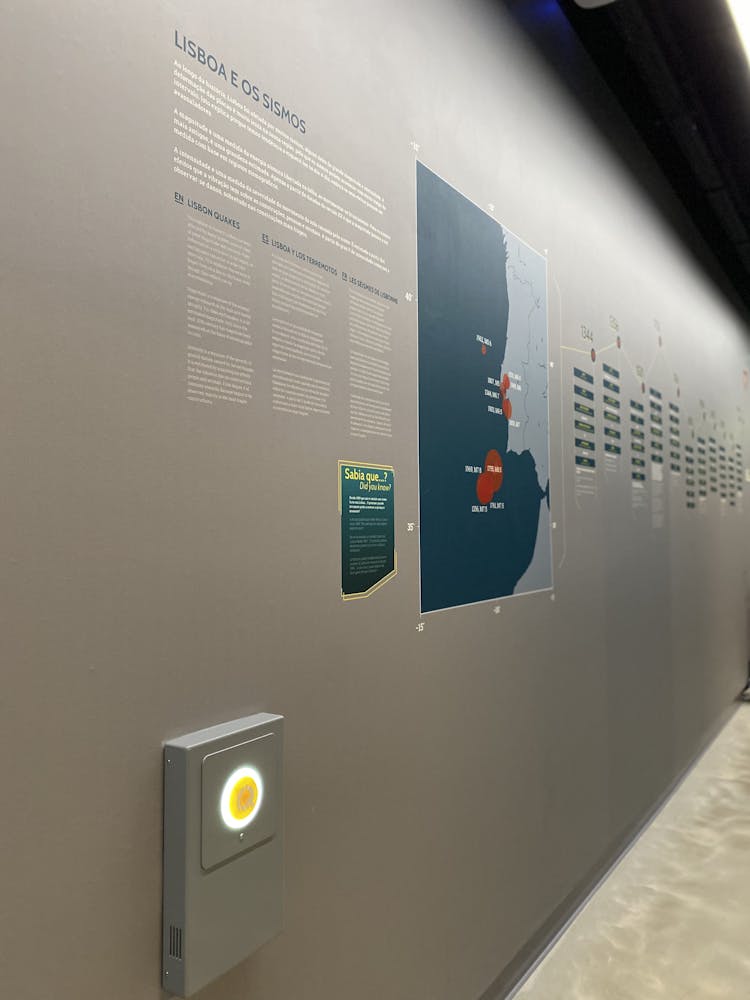
Significant Earthquakes
Portugal Tectonics and Lisbon Quakes
Read more

Tsunami and Fire
How the fires started and propagated
Read more
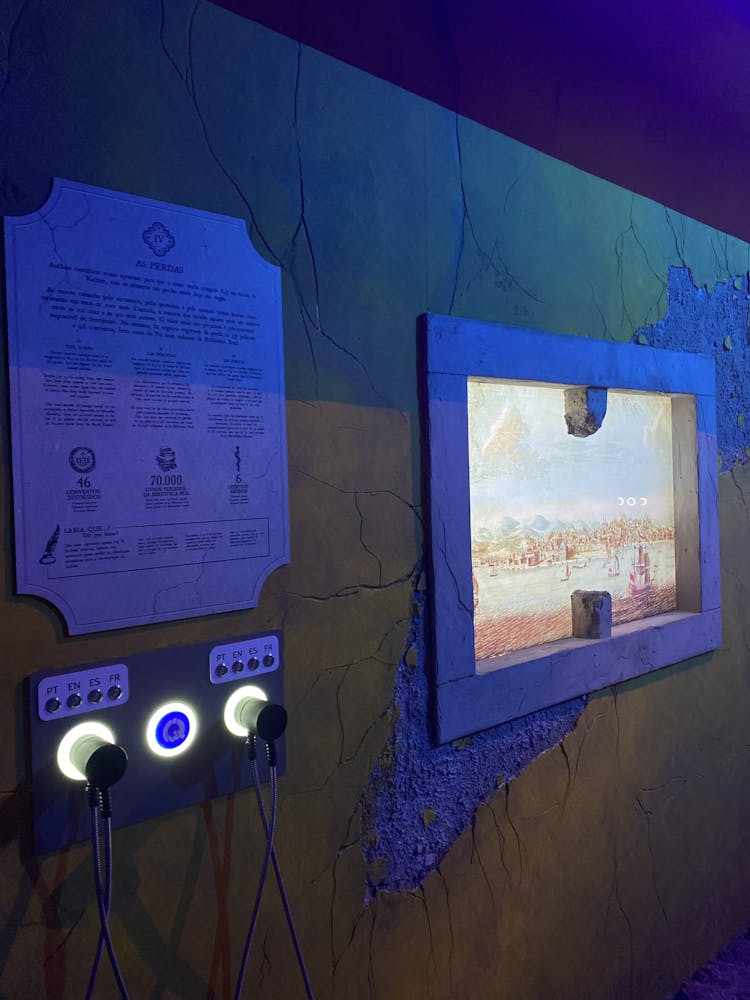
Tsunami and Fire
The losses
Read more
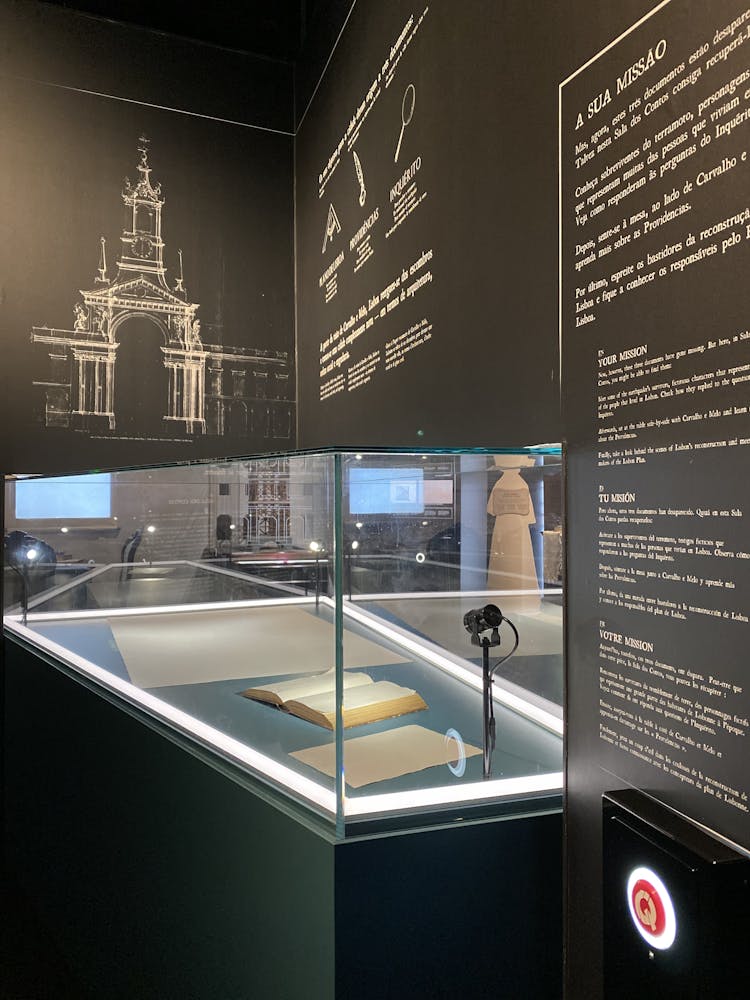
Room of Tales
The three missing documents
Read more
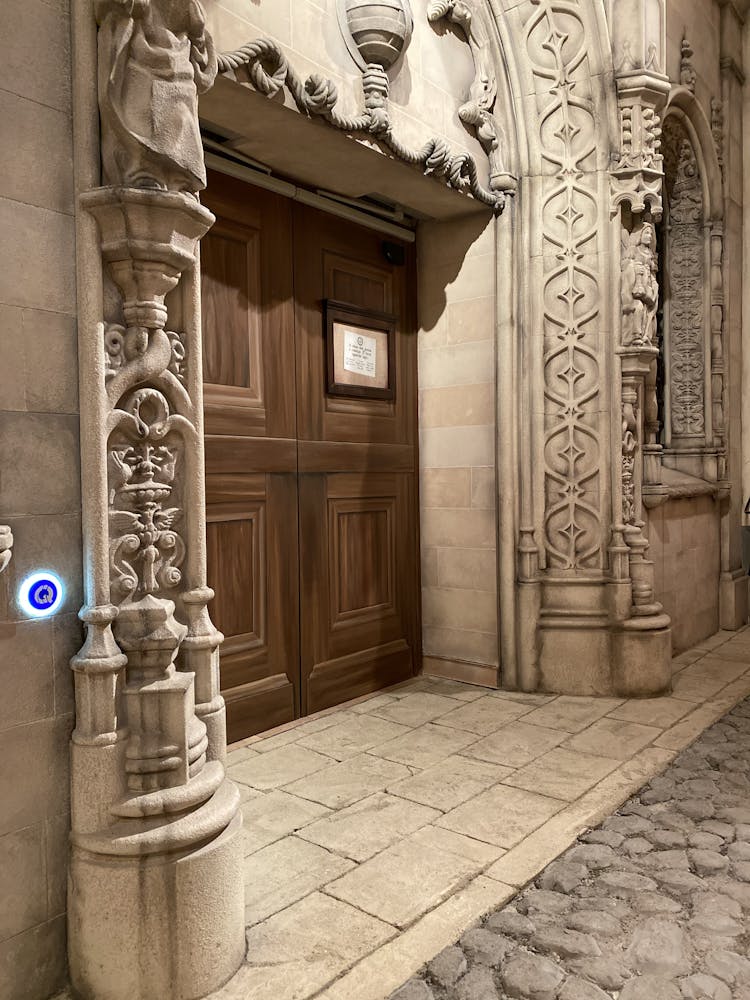
Streets of Lisbon
Traditional Rite Masses
Read more
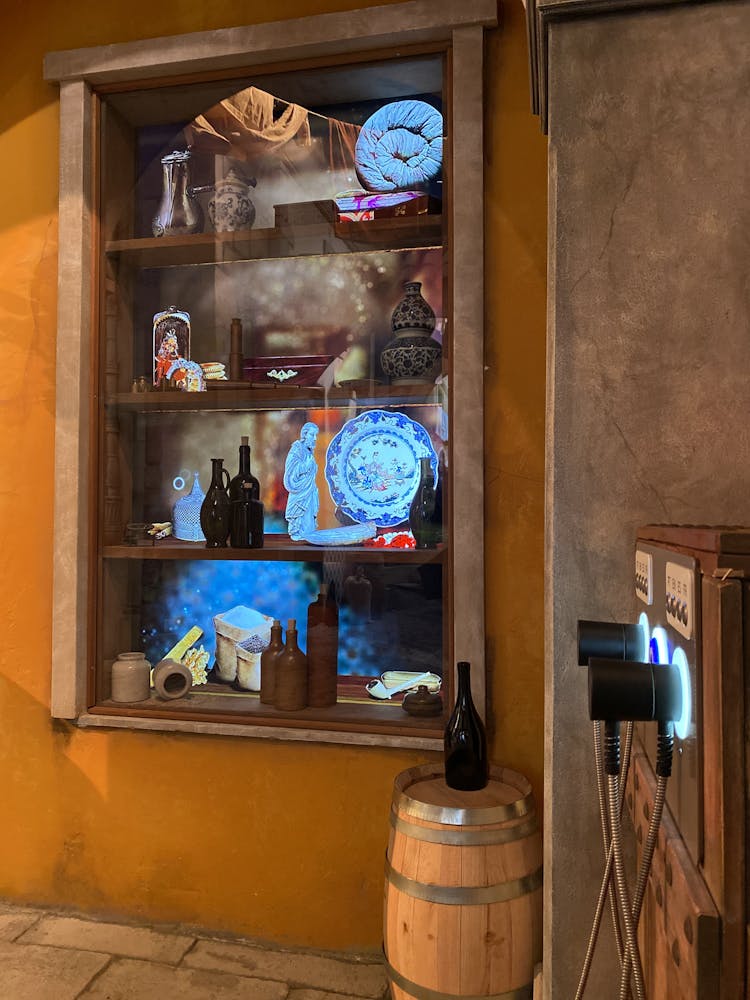
Streets of Lisbon
The connection with the colonized territories
Read more
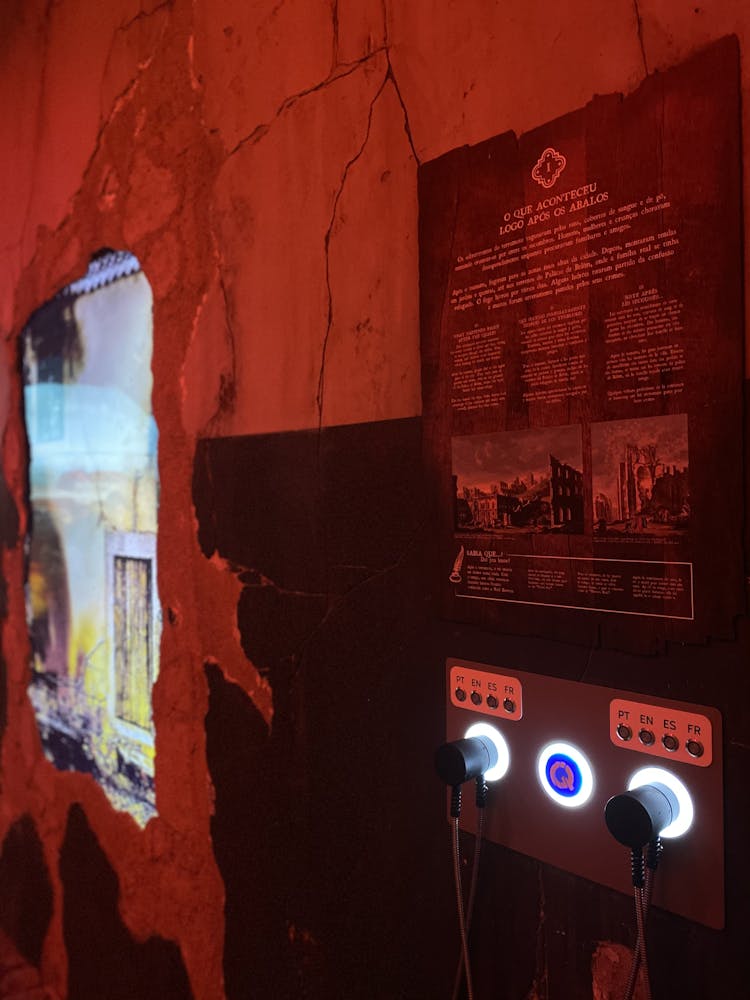
Tsunami and Fire
What happened right after the quakes
Read more
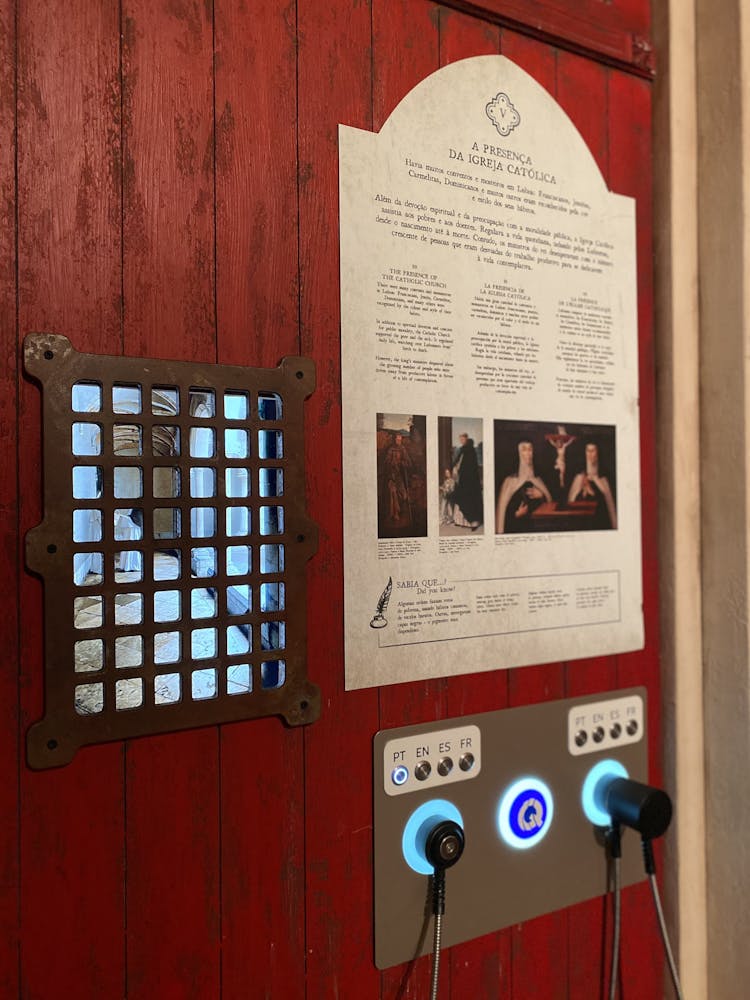
Streets of Lisbon
Presence of the Catholic Church
Read more
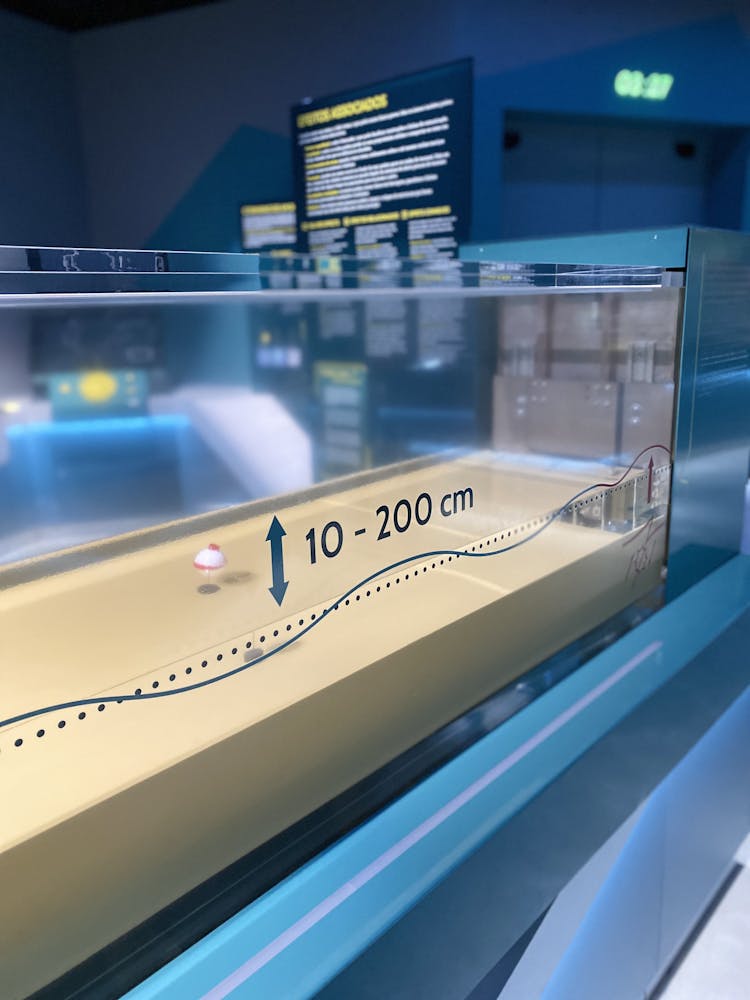
Training Centre
Related Effects
Read more
Room of Tales
The King's Ministers
Read more
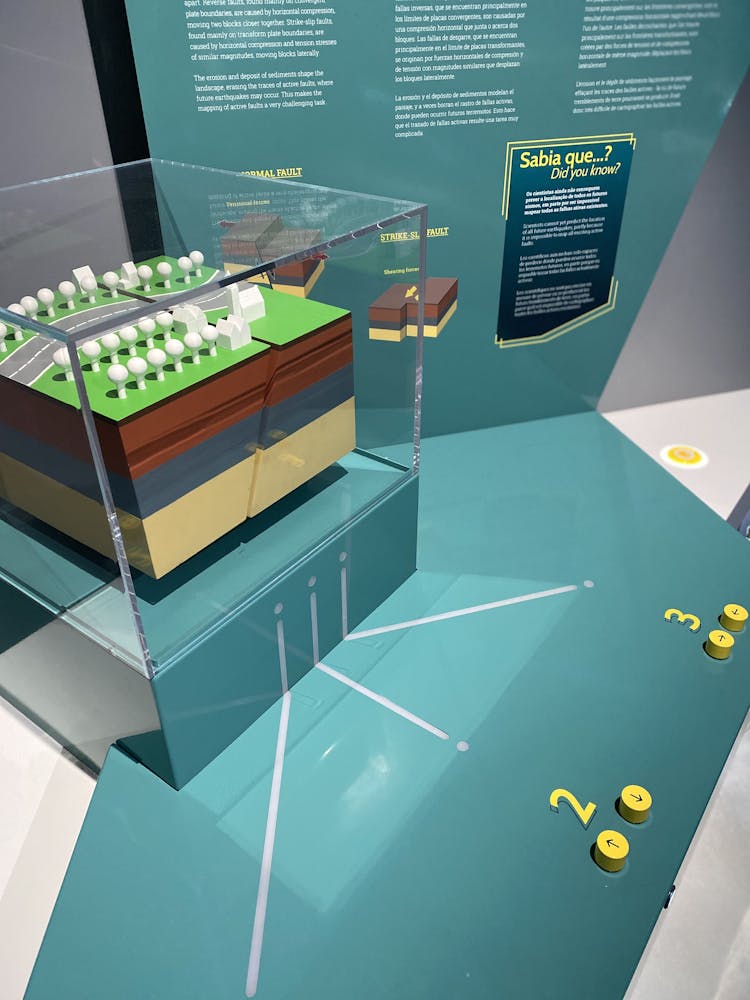
Training Centre
Earthquakes and Faults
Read more
Room of Tales
Lisbon Plan
Read more
Significant Earthquakes
San Francisco and Tohoku
Read more
Room of Tales
Manuel da Maia's Studio
Read more
Room of Tales
Gaiola Pombalina
Read more
End Tunnel
Be prepared
Read more
Room of Tales
Inquérito
Read more